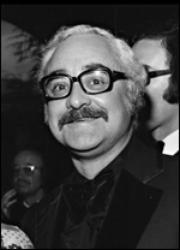
David Lynch
 USA
USADavid Lynch: A Mysterious Filmmaker
For American director David Lynch, it doesn't matter in what form he presents his material - whether it's avant-garde cinema, a television series, or a mainstream comedy. What's more important is to conceal a certain mystery behind this form, to envelop the film in an aura of secrecy, and to create a labyrinth from which it's hard to find an exit. Lynch himself is just as enigmatic and mysterious as his films. He collects the carcasses of animals at home, practices transcendental meditation, and puts up to ten spoons of sugar in his coffee, claiming that sweet ideas for new films are born to him as a result. David Lynch was born in Missoula on January 20, 1946. Growing up, David was an ordinary child, except for his penchant for collecting various dead animals. His parents often found boxes with the carcasses that he would spend hours looking at and studying. Because of his talent for drawing, Lynch decided to enroll in the School of Art in Washington, from where he transferred to the Pennsylvania Academy of Fine Arts in 1966. The Austrian expressionist Oskar Kokoschka as well as artists Hopper and Bacon had a significant influence on his artistic views. In the School of Art, Lynch created an animated film called "Six Men Getting Sick". He was so passionate about cinema that he bought a camera and made his first short film, "The Alphabet". This was followed by the work "The Grandmother", for which David Lynch received a scholarship from the American Film Institute. He spent a whole five years working on his first film, "Eraserhead", which was completed only in 1976. In this work, the director demonstrated his talent for creating surreal, perplexing, and gloomy pictures. The film lacked clear storytelling and resembled more of a journey inside consciousness. Subsequently, the film became cult and was included in the National Film Registry of culturally significant films. Lynch's next films, "The Elephant Man" (1980) and "Dune" (1984), were not avant-garde works, although they still retained the director's signature style. "Dune", based on Frank Herbert's science fiction novel, was a failure and flopped at the box office, while "The Elephant Man" received eight Oscar nominations. David Lynch's true success came after the release of "Blue Velvet" (1986), in which Dennis Hopper and Isabella Rossellini starred. The film, based on a story about subconscious fears and desires, received numerous film awards, and Lynch gained a large number of fans in both America and Europe. Some critics consider this film to be the best in the director's career. The 1990s were the most successful for David Lynch. In 1990, the road movie "Wild at Heart" was released, which won the Palme d'Or at the Cannes Film Festival. Laura Dern and Nicolas Cage delivered some of their best performances in this film. In the same year, the most famous TV series of the late 20th century, "Twin Peaks", premiered on television screens. It had tremendous success not only in America but also in Europe and Russia. Audiences eagerly awaited each episode, trying to unravel the intricacies of the plot and find the answer to the main question: Who killed Laura Palmer? The mesmerizing music by Angelo Badalamenti made the series even more mysterious. "Twin Peaks" became a cult and gathers its fans every year in Seattle. David Lynch's most convoluted and enigmatic films were "Lost Highway" (1997) and "Mulholland Drive" (2001), which received mixed reviews. Some critics called these films outright nonsense, but the majority received them enthusiastically. In these films, hyperrealism was taken to the extreme by the director. In particular, the famous philosopher and psychoanalyst Slavoj Žižek wrote that in Lynch's films, the light is truly bright, the darkness is truly black, and the fire truly burns. The films, in which dreams and reality intertwine in the most incredible way, have a lot in common, which led to discussions about them being two versions of the same film. Many couldn't piece together the puzzle called "Lost Highway" and "Mulholland Drive" and decipher the mystery that Lynch presented, causing them to doubt whether the director himself understands his films. Lynch has repeatedly stated that he knows what his films are about, although he has never revealed their secrets. Despite the mixed reviews, the magazine "Cahiers du Cinéma" named "Mulholland Drive" one of the best films of the decade, and David Lynch received the Best Director award at Cannes. Lynch's last film was "Inland Empire" (2006), which was shot on a digital camera. This three-hour film, done in Lynch's style, was largely experimental and was received rather indifferently by critics. In Lynch's body of work, there is also a typical mainstream film, "The Straight Story" (1999), which puzzled fans of Lynch's extreme works but received positive reviews. David Lynch is known not only as a director but also as an artist, photographer, musician, and writer. He is the author of "Fetish Show", a photo series featuring Christian Louboutin shoe models. Music plays a significant role in Lynch's life. He collaborated closely with composer Angelo Badalamenti, who wrote music for many of his works. Lynch himself is also involved in music. In 2001, his first album "Blue Bob" was released, followed by "Crazy Clown Time" (2011) and "The Big Dream" (2013). For over thirty years, David Lynch has been practicing transcendental meditation according to the teachings of Maharishi Mahesh Yogi and in the early 2000s, he began actively promoting it around the world. The director established a foundation that raises funds for the spread of Maharishi's ideas. In 2009, his book "Catching the Big Fish" was published, in which Lynch talks about meditation, creativity, and his understanding of the world. David Lynch has been married four times, but he is also rumored to have had affairs with many actresses, including Laura Dern and Isabella Rossellini. His eldest daughter, Jennifer, also became a director and even made several renowned films ("Boxing Helena"). Lynch is now married to Emily Stofle, who gave birth to their second daughter in 2012. Almost everyone who has known Lynch speaks of his numerous eccentricities. For example, he enjoys collecting dead animals and studying them. His collection includes a large number of flies. In his youth, Lynch regularly visited the morgue to look at bodies. One of his wives, Mary Sweeney, recounted catching the director in his workshop once. He had injured his hand, and he sat there, watching his blood flow. And once, Lynch went out to buy bread and never came back! Mary was left alone with their young child for several days. She had to divorce the director because she was greatly frightened by his eccentricities.