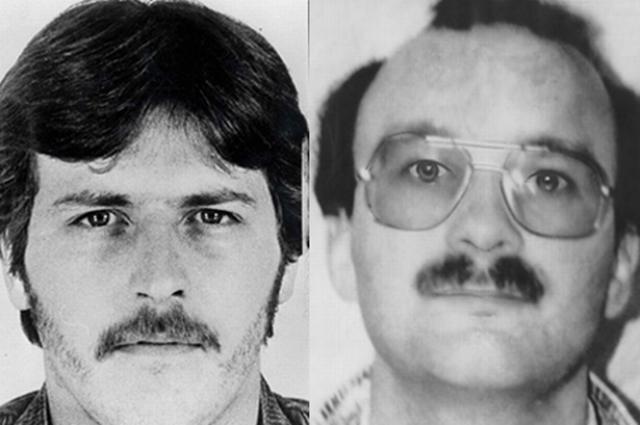
David Robert and Derek Tony Howes and Wood
 Great Britain
David Robert Howes and Derek Tony Wood were British Army corporals in the Royal Corps of Signals. They were killed in Belfast on 19 March 1988, when a car carrying them entered the funeral procession of an Irish republican killed days earlier. They were 23 and 24. The attack became one of the most notorious episodes of the Troubles, captured by television cameras and remembered both for the men’s deaths and for the escalating violence surrounding the funeral.
Service in Northern Ireland
Howes and Wood were serving with the Royal Corps of Signals, the Army branch responsible for communications. On the day they died, they had completed a routine maintenance task at a joint police and Army base in central Belfast and were returning to their unit in Lisburn. They were in a civilian car and plain clothes. In the House of Commons, the Northern Ireland Secretary said they had no reason to be near the funeral and were not involved in surveillance or duties connected to it. Why their route took them there was never established with certainty.
The funeral was for Caoimhín Mac Brádaigh, also known as Kevin Brady, a member of the IRA who had been killed during an attack at Milltown Cemetery. That incident came just days after the funerals of three IRA members killed by British forces in Gibraltar. Loyalist gunman Michael Stone had attacked mourners at Milltown, killing three people, including Mac Brádaigh. Belfast was therefore in a period of especially intense grief, anger and fear when his funeral procession began on 19 March.
The attack
As the procession moved along Andersonstown Road in west Belfast, Howes and Wood’s car came into its path. The reason remains uncertain. The crowd surrounded the vehicle and blocked it from moving away. One of the corporals fired a single warning shot into the air; neither man fired again. They were pulled from the car, assaulted, and taken away from the scene. A smaller group drove them to nearby wasteland, where they were shot dead.
The assault was filmed and photographed by journalists covering the funeral. The images, including that of priest Father Alec Reid administering last rites, became among the most widely recognized records of the Troubles. The footage also made clear how quickly a confused encounter could turn into a public killing amid a crowd already shaped by recent violence.
Aftermath and remembrance
The Provisional IRA claimed responsibility for the killings. Investigators made a large number of arrests, and the resulting prosecutions became controversial. In 1990, three men were convicted and sentenced to life imprisonment in connection with the murders. Amnesty International later raised serious concerns about fair-trial standards in many of the related prosecutions, including aspects of the convictions. The legal aftermath formed part of a broader debate about justice and due process during the conflict.
Howes and Wood are remembered as two servicemen killed while returning to their unit after routine work. Their deaths remain inseparable from the events of March 1988: the earlier killings in Gibraltar, Stone’s attack at Milltown and the funeral that followed. Remembering their lives and service also means recognizing the wider setting in which they were killed, where retaliatory violence repeatedly widened the circle of loss for soldiers, civilians and families across Northern Ireland.