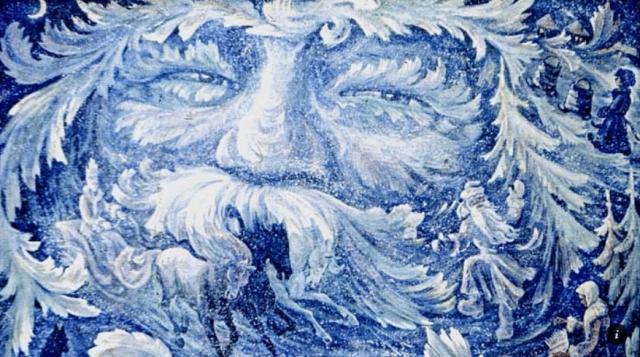
Ded Moroz
- The Birth of Winter's Master
- The Origins of Moroz
- Morok: The Slavic Spirit of Winter
- Treskun and Studenets: Attempts at Appeasement
- Literary Transformations
- Popular Customs and Beliefs
- The Patron of the New Year
- A Brief Ban
- The Modern Ded Moroz
The Birth of Winter's Master
In ancient Slavic mythology, the harsh force of nature that brought bitter cold, icy rivers, and snow-laden forests was personified as a deity known as the Lord of Cold. Over centuries, the Slavs learned to appease this formidable being, eventually incorporating his image into the festive celebrations of the New Year.
The Origins of Moroz
The various names by which frost was invoked—Morok, Morozko, Karachun, Treskun, Studenets—reflected the many aspects of its power. Poзвизд, the patron of storms and blizzards, was depicted in a cloak woven from wind and snow. Zymnik, an aged white-haired man, carried an iron mace, leaving frost in his wake and summoning a retinue of wintry creatures: wind-born birds, restless bears, howling wolves, and spirits of the frozen dead.
Morok: The Slavic Spirit of Winter
The "folkloric element" of Moroz lies in Morok, a Slavic god of deception and the master of icy cold. He would descend upon the land as a mist, bringing bitter winds and freezing temperatures. One theory suggests that Moroz derived his name from this ancient Slavic spirit. Morok, a disheveled old man, could transform people into icy statues, leaving those who encountered him in a state of "fainting" or "death."
Treskun and Studenets: Attempts at Appeasement
Treskun and Studenets emerged as new names for the spirit of winter, reflecting the Slavs' gradual attempts to soften the image of their formidable master of cold. Treskun's staff is said to have been adorned with a bull's head, a symbol of fertility. Over time, this enigmatic figure became a beloved character in folk tales.
Literary Transformations
Russian writers wove these tales, legends, and proverbs into their literary works. The harsh winter deity gradually transformed from Treskun and Karachun into the benevolent Moroz Ivanovich, a noble figure invoked in Vladimir Odoevsky's fairy tale. No longer content with controlling winter, Moroz became a teacher, guiding two young girls through a magical icy world in exchange for their hard work. The importance of labor and the futility of idleness became central themes.
Popular Customs and Beliefs
Folk customs, superstitions, and incantations surrounding Moroz faded away, but the essence of his connection with nature remained. The significance of snow as an indicator of a fruitful harvest became an agrarian truth. During the святки (winter solstice), the Slavs performed the "clikanya Moroz" ritual, inviting the winter god to a meal in exchange for sparing their crops.
The Patron of the New Year
In the 19th century, the somber figure of Moroz took on a new role. Inspired by Western Christmas traditions, he became the benevolent Christmas wizard, decked in a fur coat, long white beard, and staff. The image of Ded Moroz (Grandpa Frost) spread across the country on New Year's postcards.
A Brief Ban
Despite his popularity, Ded Moroz briefly fell out of favor during the anti-religious campaigns of the 1920s. However, a decade later, he returned to children's festivities, accompanied by Snegurochka (Snow Maiden), the symbol of frozen waters.
The Modern Ded Moroz
Today, Ded Moroz holds a prominent place in the Russian New Year. From Moscow to Veliky Ustyug, he is the beloved wizard who receives letters, delivers gifts, and aids in the fight against evil forces. Ded Moroz has evolved into a multifaceted figure, blending the characteristics of Santa Claus, Japanese Segatsu-san, and Colombian Papá Pascual. While snow may not be a universal expectation from national Father Frosts, the longing for gifts remains不变.


