Dennis Hopper
 USA
USABiography of Dennis Hopper
Dennis Hopper was an American actor, director, and screenwriter. Born on May 17, 1936, Hopper began his professional acting career as a teenager. He made his first appearance in the TV series "Medic" and starred in the feature film "Johnny Guitar" in 1953. Hopper's career in Hollywood was tumultuous and filled with eccentricities. He was known as a rebellious figure in the film industry and often clashed with directors.
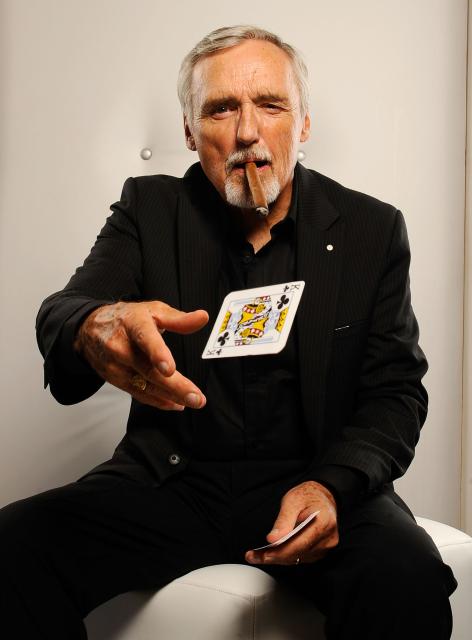
Hopper shared the ideas of the French New Wave and demanded scenes with him be filmed dozens of times. Despite the difficulties of working with him, Hopper's charisma and talent attracted audiences. He was a multi-faceted artist, involved in acting, directing, photography, and even poetry. Hopper's main goal was to convey his ideas and thoughts to the audience through various forms of art.

In 1955, Dennis Hopper appeared in the film "Rebel Without a Cause," where he starred alongside James Dean. They became friends, and after Dean's death, Hopper emulated his image on screen for a long time. A turning point in Hopper's career was the filming of "From Hell to Texas" in 1958. The film crew was so dissatisfied with the actor that they demanded his immediate dismissal. Hopper wanted to achieve perfection in his acting, leading to multiple retakes of scenes. Although the film was eventually completed, no film company wanted to work with Hopper afterward.

Realizing that no one would hire him, Dennis Hopper decided to take matters into his own hands. He raised $400,000, invited his friends Jack Nicholson and Peter Fonda, and directed the film "Easy Rider" in 1969, based on Terry Southern's screenplay. The film was influenced by the principles of the French New Wave, with many dialogues improvised on set. The actors smoking marijuana gave the film a sense of documentary realism. "Easy Rider" grossed nearly $20 million and became one of the highest-grossing films of the year. Its popularity was immense and resonated with the ideas of the counterculture youth opposing the establishment.
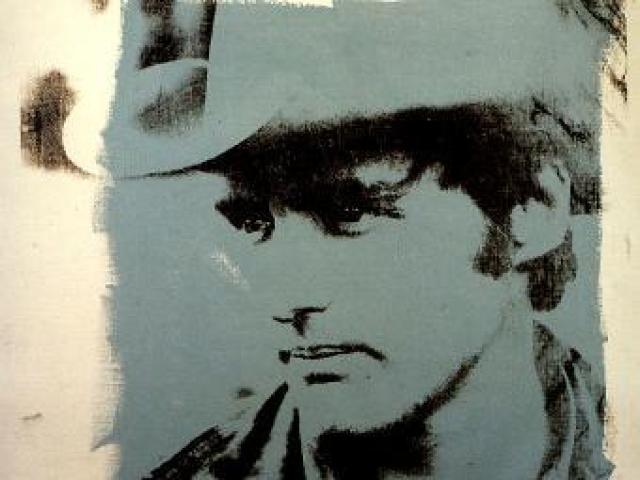
At the Cannes Film Festival, Dennis Hopper won an award for directing, and the film was nominated for the Palme d'Or. It triumphed at various international film festivals, receiving numerous awards and nominations. "Easy Rider" became a cult film and had a significant impact on independent cinema in the United States.

In the 1970s, Dennis Hopper faced personal challenges due to his struggles with alcohol and drugs. He appeared in only a few films during this time, such as "The American Friend" (1977) and "Apocalypse Now" (1979). After a prolonged period of medical treatment, Hopper returned to work. In 1986, his role as the deranged Frank Booth in the thriller "Blue Velvet" brought him critical acclaim and reestablished his position as a leading actor in Hollywood.

Hopper's return to the film industry led to the production of new films, such as "Colors" (1988), "The Hot Spot" (1990), and "The River's Edge" (1994). He was not averse to appearing in blockbuster films like "Waterworld" (1995) and "Speed" (1994). In recent years, Hopper pursued his passion for art by collecting artworks and creating his own paintings. His artwork and photographs were exhibited at the Hermitage Museum in 2007. Hopper also appeared in the music video for the song "Smiley Faces" by the band Gnarls Barkley.

Hopper was married five times and had four children. He divorced his last wife, Victoria Duffy, in 2010 shortly before his death. Hopper was diagnosed with prostate cancer in 2009, which later metastasized. On May 29, 2010, Dennis Hopper passed away at his home in Venice, a suburb of Los Angeles. Before his death, he completed his work on the TV series "Crash" and finished editing his book of photographs. Hopper will be remembered as a talented and charismatic actor, a rebel who challenged the system. His film "Easy Rider" symbolized the revolutionary spirit of the 1960s, with its themes of sex, drugs, and rock 'n' roll.