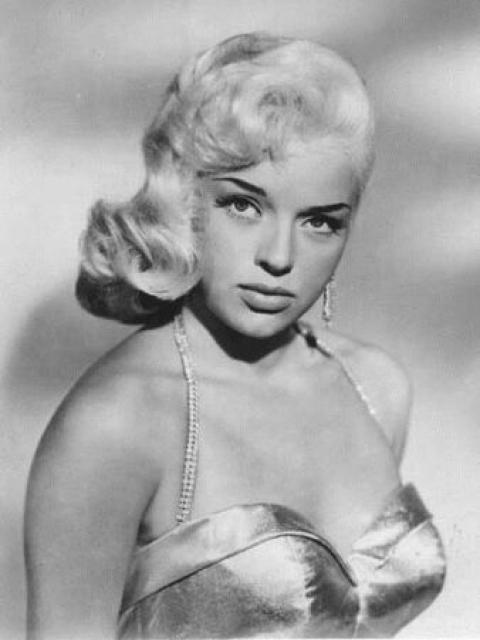
Diana Dors
 Great Britain
- A Swindon childhood and early ambition
- The role that revealed her range
- Public life and family
- Final years and legacy
Diana Dors was an English actress and singer whose glamour made her one of postwar Britain’s most widely recognized screen personalities. Marketed as a blonde bombshell and often compared with Marilyn Monroe, she built a long career in British cinema, television and theatre. Her most acclaimed screen performance came in Yield to the Night (1956), a serious prison drama that showed the range beneath her publicity image.
A Swindon childhood and early ambition
Born Diana Mary Fluck in Swindon, Wiltshire, on October 23, 1931, she was the only child of railway clerk Albert Fluck and Winifred Fluck. She became fascinated by cinema while young and trained at the Royal Academy of Dramatic Art in London. As a teenager she began appearing in films, taking small roles before moving into more substantial parts in the late 1940s and early 1950s.
Her screen image developed quickly. Dors was cast in comedies and crime dramas, including Good-Time Girl (1948), Lady Godiva Rides Again (1951), The Weak and the Wicked (1954) and A Kid for Two Farthings (1955). Publicity emphasized her platinum-blonde appearance and glamorous persona, and she became a major British star. The comparison with American screen icons helped make her famous, though it could also overshadow the serious work she wanted to do.
The role that revealed her range
Dors gave the performance she considered her finest in Yield to the Night (1956), directed by J. Lee Thompson. She played Mary Hilton, a woman on death row for murder, in a film that followed her final days in prison. The role was a marked departure from her more glamorous parts, and the film brought her critical attention for its restrained, emotionally direct portrayal of a condemned woman.
She also made a bid for Hollywood. Among her American films were The Unholy Wife (1957), opposite Rod Steiger, and I Married a Woman (1958). The move did not produce the sustained international career she had hoped for, and she returned to Britain, continuing to work in films such as Passport to Shame (1958), The Long Haul (1957), and later Hannie Caulder (1971). Her career eventually extended across more than three decades and included scores of film and television appearances.
Public life and family
Dors’s public persona was bold, witty and self-aware. She used her celebrity in music, stage work and television, and in the early 1980s appeared regularly on the breakfast programme TV-am, including an advice segment. Her openness and comic timing helped her remain a familiar media presence even as leading film roles became less frequent.
She married three times: first to Dennis Hamilton, then to American comedian and television host Richard Dawson, and finally to actor Alan Lake. She had three sons: Mark and Gary with Dawson, and Jason with Lake. Her family life and the attention surrounding her marriages were often covered by the press, contributing to the public fascination with her.
Final years and legacy
In 1982, Dors was diagnosed with ovarian cancer and underwent surgery. The illness returned, and she died in Windsor on May 4, 1984, aged 52. Even after her death, the image of the glamorous “British Marilyn Monroe” remained closely attached to her name. Yet films such as Yield to the Night continue to show a more complex performer: a skilled actress whose talents extended well beyond the star image built around her.


