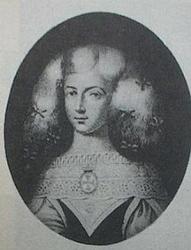
Diane Poitier
 France
Biography of Diane de Poitiers
Diane de Poitiers was born on September 3, 1499, in the town of Senn-Vallee in the Alps. Her parents were Jean de Poitiers, the Lord of Senn-Vallee, and Jeanne de Batarnay. From a young age, Diane was surrounded by nobility, as her mother came from a prestigious family. As a young girl, Diane served in the entourage of Anne de Beaujeu, the daughter of Louis XI and regent of France. However, the de Poitiers family's lineage was even more ancient than that of the Valois dynasty, and Diane always remembered her noble heritage.
At the age of fifteen, Diane married Louis de Breze, the Seneschal of Normandy and the grandson of King Charles VII. Despite their significant age difference, their marriage was happy and filled with love. Diane's husband was an experienced lover who taught her the secrets of seduction, making his age irrelevant to the young woman. They had two daughters together, Francoise and Louise, and Diane remained faithful to her husband throughout their life together.
However, there was an incident in 1523 when Diane's father was sentenced to death, and she had to seek the help of King Francis I to overturn the sentence. Rumors circulated that she achieved this by compromising her marital fidelity. Yet, under a portrait of Diane, King Francis I wrote, "The beauty that is immune to seduction." In 1531, Diane's husband passed away, and she mourned him for the rest of her life, wearing black as a symbol of her eternal devotion. Later, she added white and gray to her wardrobe, which became fashionable colors at court.
After her husband's death, Diane successfully retained his title and fulfilled his duties as the Seneschal of Normandy. She regained all the privileges that had belonged to her husband as a member of the royal family and enjoyed his income. Despite her age, Diane managed to remain at the French court as a lady-in-waiting to the queen and continued to hold influence even after the queen's death.
In 1524, King Francis I lost the Battle of Pavia and was wounded and captured by the Spanish. The invaders demanded his freedom in exchange for his sons Francis and Henry. At the ceremony where the children were handed over, Diane approached Henry and kissed him, offering comfort as best she could. Henry, who was only eight years old at the time, remembered this kiss from the beautiful lady until the end of his days. This encounter marked the first meeting between Diane and Henry II, the future king of France.
The boys returned home four years later, hardened and fearless. Diane became Henry's guardian and taught him good manners. Despite being 39 years old, Diane became Henry's mistress. The years had not aged her; in fact, she only grew more beautiful. Her secret to eternal youth likely lay in her lifestyle. Diane had a habit of rising early, taking cold baths, and taking a two-hour horse ride. She would then sleep again before lightly breakfasting and settling down to read. She never used cosmetics, drank, or smoked, and was renowned for her beauty at court.
In 1533, Henry married Catherine de' Medici, who was much younger than Diane. However, Henry remained faithful to his beloved mistress. Catherine, consumed by jealousy, complained to one of her ladies-in-waiting. They decided to spy on the lovers to discover what captivated the king about this older woman, hoping to then ridicule her. To their surprise, they found Diane to be luxurious, fair-skinned, well-groomed, and in excellent shape. The relationship between Diane and Henry was passionate, elegant, free, and beautiful. The queen was disheartened by what she witnessed, as she had never experienced such a relationship with Henry. She sincerely remarked, "Alas, I wished to see what I should not have seen, and it caused me pain."
Diane made many efforts to draw the king's attention to his wife, and the two women even managed to become friends. Diane possessed keen intelligence and had an excellent understanding of politics. Her influence at court and over the king seemed boundless. Henry II valued her experience, listened to her advice, and often had her write official letters on his behalf. Diane became popular at court, and many sought her favor. She remained the king's most reliable ally.
In 1548, Diane received the title of Countess of Valentinois from the king. Five years later, he made her the Duchess of Etampes and presented her with one of France's most beautiful castles, Château de Chenonceau. Although such favoritism towards Diane caused Queen Catherine to become jealous, she could do nothing as long as the king lived.
In 1559, tragedy struck when King Henry II was fatally wounded in a tournament. Catherine de' Medici ordered Diane de Poitiers to leave the court immediately, leaving behind all the precious gifts the king had given her. However, Diane, upon learning that the king was still alive, defied the order and refused to abandon the royal palace, believing that as long as the king was alive, no one had the authority to command her. Henry II soon passed away, and Francis II ascended to the throne. He repeated his mother's demand for Diane to leave.
Diane de Poitiers was forced to retreat to her castle. Despite being abandoned by everyone, she managed to establish several hospitals before her death at the age of 67. A statue of Diane made of white marble was placed in the castle's church, which was later transferred to the Louvre, where it can still be seen today.