Diego Vijil
 Nicaragua
- A Prominent Central American Statesman and Military Leader
- An Era of Change and Division
- Liberalism and Conservatism
- The Presidency of Honduras
- Vice-Presidency of Honduras and Presidency of El Salvador
- The End of the Federation
- The Fall of Morazán and Barrundia's Legacy
A Prominent Central American Statesman and Military Leader
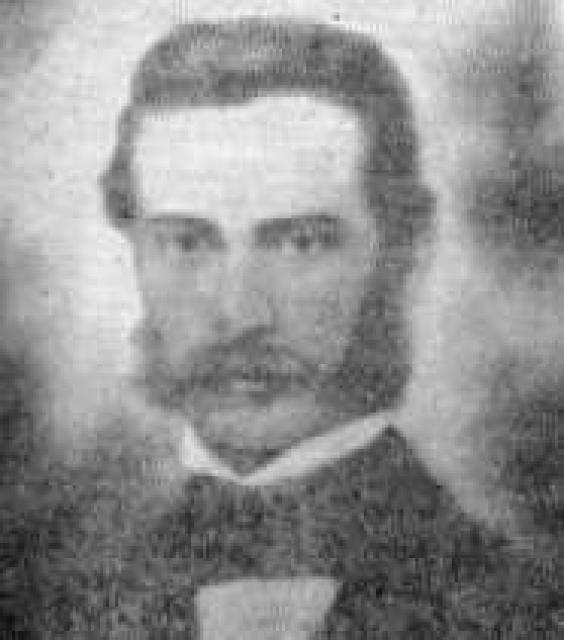
José Francisco Barrundia y Cepeda, a distinguished statesman and military figure in Central America, was born in Tegucigalpa in 1799. He graduated from the University of León and initially pursued a career in law and notary work in Tegucigalpa.
An Era of Change and Division
During Barrundia's early life, significant political developments were taking place in Central America. Mexico declared independence from Spain in 1821, leading to the creation of the First Mexican Empire, which included the territory of Guatemala. However, in 1823, the United Provinces of Central America emerged as an independent entity, consisting of Guatemala, Honduras, El Salvador, Nicaragua, and Costa Rica.
Liberalism and Conservatism
The newly formed union faced divisions between liberals, who advocated for equal distribution of landownership, and conservatives, who sought to maintain the social order inherited from the colonial era. Barrundia aligned himself with the liberals and became a member of the Federal Parliament in 1824.
The Presidency of Honduras
Barrundia served as the governor of Tegucigalpa from 1826 to 1827. However, he was arrested after Federal President Manuel José Arce occupied the city. He was liberated following the entry of General Francisco Morazán's army into Tegucigalpa in 1827.
Vice-Presidency of Honduras and Presidency of El Salvador
After Morazán's victory over the conservative federal troops, Barrundia was appointed Vice-President of Honduras and subsequently served as President from 1828 to 1829. During his presidency, he implemented the secularization of church property, transferring it to the state and converting monasteries into public buildings.
In 1836, General Morazán appointed Barrundia President of El Salvador, where he served until 1838. His presidency was marked by the outbreak of a cholera epidemic, which the government struggled to contain. The epidemic drained the treasury, and riots erupted in the country. Despite the challenges, Barrundia granted amnesty to the rebels.
The End of the Federation
Following the assassination of Federal Vice-President Gregorio Salazar, Barrundia was appointed to the position in 1838. As acting president in 1839, he attempted to preserve the Federation but faced opposition from several provinces. By 1840, the Federation dissolved, leaving El Salvador as its sole member.
The Fall of Morazán and Barrundia's Legacy
In 1840, Barrundia supported Morazán's seizure of power in Costa Rica. After Morazán's execution in 1842, Barrundia retired to Granada, where he remained until his death in 1845. His legacy as a prominent advocate for liberal principles and a staunch supporter of Central American unity continues to be recognized in the region.