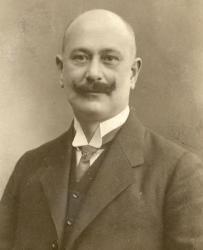
Dinu Lipatti
 Romania
- Biography of Dinu Lipatti
- Early Life and Education
- Musical Career
- Musical Style and Legacy
- Unique Performance Style
- Selected Discography
Biography of Dinu Lipatti
Dinu Lipatti was a Romanian classical pianist whose career was tragically cut short at the age of 33 by his death from lymphogranulomatosis. Despite his short career and relatively small archive of recordings, many experts still consider him one of the most exquisite pianists of the 20th century. He was friends with Clara Haskil. Lipatti was born in Bucharest into a musical family: his father was a violinist, his mother was a pianist, and his godfather was none other than the famous violinist and composer George Enescu.
Early Life and Education
Lipatti was born into a musical family in Bucharest. His father was a violinist and his mother was a pianist. He was even godfathered by the renowned violinist and composer George Enescu. Lipatti showed a talent for the piano at a young age and went on to study in Paris under the guidance of Alfred Cortot and Nadia Boulanger. He gained recognition when he placed second in an international piano competition in Vienna, prompting Alfred Cortot to resign from the jury in protest of Lipatti not being awarded first place.
Musical Career
With the outbreak of World War II, Lipatti continued to give concerts throughout Europe, including in territories occupied by the Nazis. However, by 1943, Lipatti had fled his native Romania due to the war and settled with his wife in Geneva, Switzerland, where he became a professor of piano at the conservatory. It was during this time that the first signs of his illness appeared. Lipatti was eventually diagnosed with lymphogranulomatosis (known as Hodgkin's disease in the English-speaking world) in 1947. As a result, his performances became increasingly rare after the war. He gave his farewell concert in Besançon on September 16, 1950. Despite his serious illness, Lipatti delivered an astounding performance of Bach's C-sharp major Partita, Mozart's A minor Sonata, Schubert's Impromptus, almost all of Chopin's waltzes, and a jubilant transcription of Bach. He passed away less than 3 months later. Lipatti is buried alongside his wife, a renowned piano teacher, in a small cemetery near Geneva.
Musical Style and Legacy
Specialists particularly note Lipatti's artistry in his interpretations of Chopin, Mozart, and J.S. Bach, but among his recordings, we can also find works by Ravel, Liszt, Enescu, Schumann (including his Concerto), and Grieg (also including his Concerto). His recording of Chopin's waltzes remained a favorite among classical music enthusiasts for a long time. Beethoven's music was a rare guest in Lipatti's repertoire, but he performed Beethoven's 5th Concerto twice in Bucharest during the 1940-41 season and even expressed his readiness to record it for EMI in 1949. Lipatti's expressive power, beauty, and sincerity in his recordings continue to inspire pianists and music lovers around the world.
Unique Performance Style
From today's perspective, Lipatti's habit of playfully engaging with the audience before starting a performance may seem a bit unusual. It requires some skill to understand when the pianist has actually begun the main execution of the piece, as he rarely pauses.
Selected Discography
- 1939 - Johannes Brahms: Waltzes, Op. 39 (with Nadia Boulanger)
- 1947 - Robert Schumann: Piano Concerto (with Herbert von Karajan)
- 1948 - Edvard Grieg: Piano Concerto (with Alceo Galliera)
- 1948 - Frederic Chopin: Waltzes
- 1950 - Robert Schumann: Piano Concerto (with Ernest Ansermet)
- 1950 - Farewell Concert in Besançon (J.S. Bach, Mozart, Schubert, Chopin)