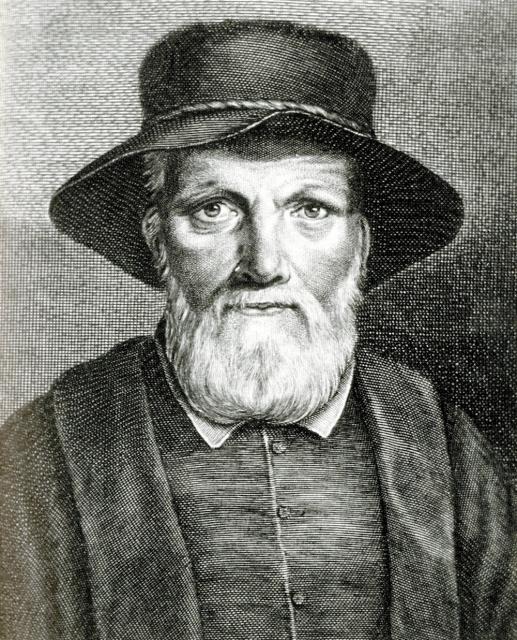
Dirck Volckertszoon Coornhert
 Netherlands
- Dirk Volckertszoon Coornhert: A Dutch Polymath
- Early Life and Influences
- Literary and Artistic Pursuits
- Philosophical and Religious Views
- Political Activism and Exile
- Legacy and Influence
Dirk Volckertszoon Coornhert: A Dutch Polymath
Dirk Volckertszoon Coornhert, born in Amsterdam in 1522, was a multifaceted figure who left a lasting legacy on Dutch culture. He was a scholar, writer, theologian, artist, notary public, and a humanist thinker and political activist.
Early Life and Influences
As the youngest son of a cloth merchant, Coornhert spent his early years in Amsterdam. At the age of 17, he married Cornelie Simons, 12 years his senior and from a poor family. This marriage was met with disapproval from his family, who disinherited him. Even after his father's death, his mother refused to leave him any inheritance. Some speculate that this financial hardship may have motivated Coornhert to pursue artistic engraving.
Literary and Artistic Pursuits
Coornhert was a skilled musician and played the flute and lute. He also wrote poetry, some of which is believed to have influenced the lyrics of the Dutch national anthem, "Het Wilhelmus." Known as a playwright and teacher of Latin, he held the position of notary and later became secretary of the Haarlem council in 1564.
As an artist, Coornhert partnered with the Italian artist Marten van Heemskerck to produce a series of etchings and engravings. He rapidly gained authority and experience as a printmaker while Heemskerck found fame through the widespread distribution of his designs.
Philosophical and Religious Views
Coornhert lived during a turbulent time in Dutch history, marked by the Reformation and the struggle for independence from Spain. Despite his upbringing in the Catholic faith, he became a religious humanist and supported the ideals of the Reformation, though he remained within the Catholic Church.
Coornhert became a prominent advocate for freedom of conscience and religious tolerance. He denounced the persecution of heretics and argued that faith should be based on love and mercy rather than coercion. As a staunch opponent of sectarianism, he believed that the true church of Christ was one united in spirit, regardless of specific religious denominations.
Political Activism and Exile
Coornhert's religious and political views made him a target of persecution. He was accused of heresy and forced into hiding on multiple occasions. In 1567, he was arrested and imprisoned, awaiting trial before the Spanish Inquisition.
Released from prison, Coornhert continued to support the Dutch independence movement. He became a close friend and advisor to William the Silent, the Prince of Orange. His opposition to the Spanish authorities led him into exile in Germany and England.
Legacy and Influence
Dirk Volckertszoon Coornhert died in Gouda in 1590. His writings, which included essays, pamphlets, and letters, were highly influential in his time and continue to be studied today. His advocacy for religious freedom, tolerance, and the Dutch language made him a central figure in the cultural and political history of the Netherlands.
While less well-known internationally than his contemporary Erasmus of Rotterdam, Coornhert's contributions to Dutch culture are undeniable. He played a crucial role in shaping Dutch intellectual life during a period of great upheaval and transformation.


