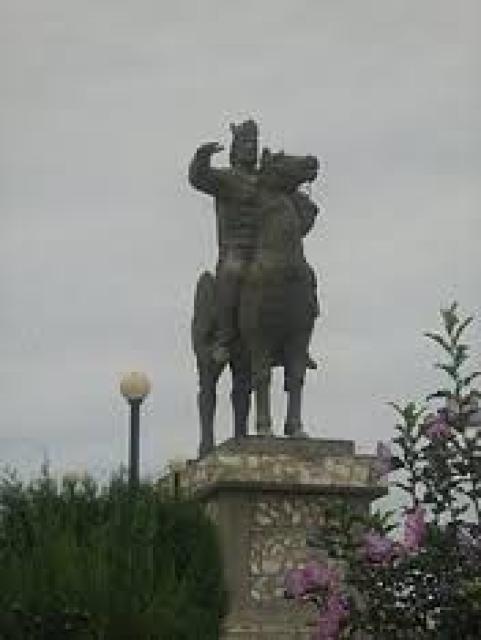
Divashtich
- Devashtich: The Afshin of Panjakent
- Early Life and Reign
- Rebellion against Arab Conquest
- Discovery of Devashtich's Archive
- Political and Diplomatic Significance
- Fragment in Samarkand
Devashtich: The Afshin of Panjakent
Devashtich ruled as the Afshin (ruler) of Panjakent, one of the last strongholds of Sogdian civilization. He is believed to have assumed power around 708 AD.
Early Life and Reign
Devashtich grew up in Panjakent and married the daughter of the local ruler, Chekin Chur Bilge. After Chekin's death, Devashtich ascended to the throne.
Rebellion against Arab Conquest
In 720 AD, Devashtich joined King Gurek of Sogdia in a rebellion against the invading Arab forces. After the Arab conquest of Mount Mug, Devashtich was captured and crucified in 722 AD by Sa'id al-Harashi, the Arab governor of Khorasan.
Discovery of Devashtich's Archive
In 1932, Devashtich's archive was discovered in the ruins of Mug-K'ala fortress on Mount Mug. This important collection of 74 Sogdian texts includes letters written by Devashtich himself.
Political and Diplomatic Significance
One of Devashtich's letters, document B-17, provides invaluable insights into Sogdia's political and diplomatic history. It suggests that Devashtich considered himself a vassal of the Khagan of the Eastern Turks. The letter also mentions a visit from the king of Ferghana and the arrival of military detachments from the Eastern Turks and China.
Fragment in Samarkand
More recently, a fragment of a document believed to be from Devashtich's archive was discovered at the Afrosiab Museum in Samarkand. This further enriches our understanding of this enigmatic ruler and his pivotal role in Sogdian history.


