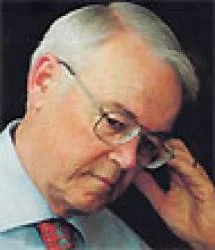
Dmitri Mendeleev
- A Siberian childhood and a scientific education
- Finding a pattern—and leaving room for the unknown
- A chemist with wide-ranging interests
Dmitri Mendeleev looked at the known elements and saw a pattern that other chemists had not yet turned into a reliable system. His periodic table did more than tidy up chemistry: by leaving gaps and predicting what belonged in them, it made the table a tool for discovery. The Russian scientist’s curiosity stretched well beyond that landmark, from teaching and measurement to petroleum and industrial questions.
A Siberian childhood and a scientific education
Mendeleev was born on February 8, 1834, in Tobolsk, Siberia, the youngest child in a large family. His father, a teacher, lost his sight when Dmitri was young; his mother, Maria, worked to keep the family afloat and encouraged her son’s education. After her death, he continued his studies in St Petersburg, training at the Main Pedagogical Institute and qualifying as a teacher.
He taught and pursued research before taking up a professorship in chemistry at St Petersburg University. Mendeleev became known as a demanding and energetic educator. To prepare a chemistry textbook, he needed a clear way to present the elements and their compounds. That practical challenge helped lead him toward a broader scientific idea.
Finding a pattern—and leaving room for the unknown
In 1869, Mendeleev arranged the elements largely by atomic weight and grouped those with similar chemical behavior. He proposed that their properties recur periodically. When the available measurements did not fit the pattern, he sometimes questioned the measurements and moved elements into more suitable positions. He also left spaces for elements not yet discovered.
Those gaps were bold predictions. Mendeleev described the expected properties of missing elements he called eka-aluminium, eka-boron, and eka-silicon. Later discoveries—gallium, scandium, and germanium—matched important features of his forecasts. Their arrival helped persuade chemists that the periodic system reflected a real order in nature, rather than merely offering a convenient chart.
Mendeleev was not the only scientist working toward a periodic classification; Julius Lothar Meyer developed a related system independently. Mendeleev’s willingness to make testable predictions, and his continuing revisions of the table, gave his version unusual force. The modern table is arranged by atomic number rather than atomic weight, but the periodic principle he articulated remains central to chemistry.
A chemist with wide-ranging interests
Mendeleev wrote the influential textbook Principles of Chemistry, revised his periodic system as science advanced, and worked on physical chemistry, solutions, gases, and the properties of materials. He also studied petroleum and argued that it was too valuable to waste simply as fuel, seeing it as a source for chemical products. His interests extended to industrial development and to the standards used for weights and measures.
He left his university post in 1890 after a dispute with officials over student concerns, then continued scientific and public work. In 1893 he became director of Russia’s Bureau of Weights and Measures, where he helped strengthen national measurement standards. He died in St Petersburg in 1907.
Mendeleev’s table endures because it captured a relationship among the elements and remained open to correction. Its empty spaces were an invitation to future chemists: go out, find what is missing, and test whether the pattern holds.