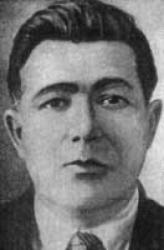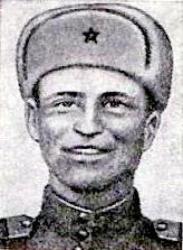
Dmitriy Ovcharenko
 Ukraine
The Legend of Dmitry Ovcharenko
Legends, tales, and works of fiction have preserved numerous descriptions of military exploits that may seem unreal to the average person. It is commonly believed that in these cases, traditional hyperboles and metaphors are used, which become even more pronounced the further away the event is from us, which impressed the contemporaries. However, in some cases, such stories have documentary evidence, making them even more remarkable. Dmitry Ovcharenko is an ordinary guy from the Ukrainian village of Ovcharovo, which is now part of the Troitsky district of the Luhansk region, and in 1919 was part of the Kharkov province. The future hero was born during the troubled times of the civil war, when the power in the village changed almost every week, and even the exact date of his birth could not be determined. The head of the family, Roman Ovcharenko, was a recognized master of carpentry in the village, and his mother, Vasilisa Ignatyevna, managed the household, and Dmitry learned peasant work from an early age. He completed just five grades of the rural school, after which he began working in the collective farm alongside adults, managing both horses and haymaking, and also learned skillful handling of an ax from his father. In 1939, Dmitry Ovcharenko was drafted into the Red Army and became a machine gunner. He did not have time to complete his term of service and return to his native village - from the first days of the war, he found himself on the Southern Front. After a minor injury, Dmitry remained on duty but was transferred from his machine gun platoon to the warehouse, where he served as a cart driver, delivering ammunition to the soldiers with a horse-drawn carriage. On July 13, 1941, the rifle regiment, which included Dmitry as a cart driver, was engaged in heavy fighting near the Moldovan town of Beltsy. Dmitry Ovcharenko, having received boxes of ammunition at the warehouse, packed them in the carriage, carefully covered them with canvas, and set off the horses towards the line of fire. Although his path passed through the rear, the cart driver held his rifle ready. Approaching the small town of Pesets, Dmitry unexpectedly saw two German military trucks emerge from around the corner. Each truck carried about fifty soldiers, accompanied by three officers. It was too late to turn back, and the forces were clearly unequal. Realizing this, one of the German officers approached the carriage and knocked the rifle out of the cart driver's hands, then pulled back the canvas and began inspecting the cargo. However, before he could bend down, Dmitry grabbed the sharply sharpened ax hidden at the front (he never parted with it in the field) and swiftly struck the officer's neck, causing him to fall dead. The astonished German soldiers did not immediately understand what had happened. Without giving the enemy time to recover, Dmitry threw three grenades at them, which he also had with him. The Germans scattered. Ovcharenko, carried away by the heat of the moment, rushed after them with the ax, completely forgetting about his rifle, and later regretted that he could not inflict even greater damage on the enemy with firearms. However, Dmitry chased after the wounded officer and, catching up with him, managed to behead him with his merciless ax. It was later discovered that 21 people were killed in the explosion of the three grenades. The third officer and the surviving soldiers, who were lucky enough to escape, managed to flee. After this short and victorious battle, cart driver Ovcharenko meticulously collected the documents of the deceased fascists, tablets with maps, and weapons and continued on his way. Upon arriving at the company's headquarters, Dmitry reported the incident to the command and presented his trophies. After delivering the ammunition to their destination, Ovcharenko, along with the carriage, set off on the return journey, accompanied by the inspector. The scene of the battle fully confirmed the driver's story - burned-out trucks stood in the indicated area, the bodies of German soldiers cut to pieces by shrapnel lay around, and officers who had been chopped with an ax were found. The company's command decided that this episode convincingly demonstrated Dmitry Ovcharenko's courage and combat abilities and reinstated him as a machine gunner. Dmitry now began fighting the enemy on the front lines. Just two weeks later, as indicated in his commendation, during a battle on an unnamed height (which, like in the song, was nameless and marked on maps as 239, 8), he continuously fired, setting an example for everyone else. The heroic battle of Dmitry Ovcharenko was reported in the front newspaper, and in early August 1941, he was nominated for the title of Hero of the Soviet Union. It is worth noting that such an award in the first year of the war was a rarity. The corresponding government order conferring this title, the awarding of the "Golden Star" and the Order of Lenin, was dated November 9, 1941. After receiving the award, Dmitry Ovcharenko continued his journey along the difficult and bloody roads of the war. As part of the Third Tank Brigade, he reached Hungary. There, near the Sherigesh station, Private Ovcharenko was mortally wounded and died on January 28, 1945, in a hospital (according to other information, he died on the battlefield and was not buried due to the retreat). A street in his hometown is named after him, and a monument to the hero is erected there. Unfortunately, the brave soldier did not have children who could inherit his fearlessness and ability to resist the enemy by all possible means.
The Legacy of Dmitry Ovcharenko
The story of Private Dmitry Ovcharenko's personal bravery is not as well-known as the tales of more famous war heroes. Its publication on websites dedicated to the anniversary of Victory sparked a wave of admiring responses. Ovcharenko was called the "Red Terminator," the "Soviet Rambo," and the names of other action heroes were used, playing on the name "Pesets" in a way that was likely unknown to its inhabitants at the time. Most likely, Dmitry himself would not have wanted such fame. It was enough for him that he was able to achieve victory over the enemy - and he continued to strive for this throughout his short life.