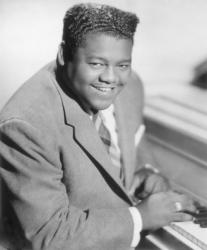
Dmitriy Shostakovich
- Birth and Early Life
- Education and Career Beginnings
- The First Symphony and International Recognition
- Pioneering Experiments
- Opera and Film Music
- "Lady Macbeth of Mtsensk" and Stalin's Disapproval
- Orchestral Compositions
- Chamber Music and Solo Piano Works
- The Great Patriotic War and Beyond
- Post-War Career and "Anti-Formalist" Campaign
- Return to Symphony and Late Works
- Poetic Symphony and Philosophical Lyricism
- The Fifteenth Symphony and Legacy
- Legacy and Cultural Impact
Birth and Early Life
Dmitry Dmitryevich Shostakovich, a prominent composer, pianist, educator, and public figure, was born on September 12 (25), 1906, in St. Petersburg, Russia. Born into a family of Polish descent, his father was an engineer and music enthusiast, while his mother, a gifted pianist, provided his initial piano lessons.
Education and Career Beginnings
In 1919, after attending a private music school, Shostakovich enrolled in the Petrograd Conservatory for piano studies, later switching to composition. As a student, he worked as a piano accompanist for silent films. He graduated from the Conservatory in 1923 as a pianist and in 1925 as a composer, his diploma work being the First Symphony.
The First Symphony and International Recognition
Shostakovich's First Symphony, composed in 1925, became a groundbreaking event in music and launched the composer's international reputation. The symphony showcased his synthesis of classical traditions with fresh and dynamic elements, marked by active and contrasting themes.
Pioneering Experiments
Following the First Symphony, Shostakovich embarked on a period of experimentation. In the late 1920s, he composed works such as the First Piano Sonata, the "Aphorisms" for piano, the Second Symphony ("October"), and the Third Symphony ("May Day").
Opera and Film Music
Shostakovich's interest in opera and film music also emerged during this time. His opera "The Nose" (1928), based on Nikolai Gogol's story, and his opera "Lady Macbeth of Mtsensk" (1932), adapted from Nikolai Leskov's novella, explored social and political themes through grotesque and satirical elements.
"Lady Macbeth of Mtsensk" and Stalin's Disapproval
"Lady Macbeth of Mtsensk" achieved international acclaim, but its performance in January 1936 was attended by Joseph Stalin. Stalin's negative reaction led to a scathing editorial in the newspaper "Pravda," denouncing the opera as "Muddle Instead of Music," severely curtailing Shostakovich's creative freedom for years to come.
Orchestral Compositions
Despite the setbacks, Shostakovich continued to compose symphonies. His Fourth, Fifth, and Sixth Symphonies, composed between 1934 and 1939, represented a significant evolution in his orchestral work.
Chamber Music and Solo Piano Works
In parallel with his symphonic output, Shostakovich also composed chamber music. His Cello Sonata (1934), First String Quartet (1938), and Piano Quintet (1940) showcased his mastery of intimate and balanced forms.
The Great Patriotic War and Beyond
The outbreak of World War II inspired Shostakovich's Seventh Symphony (1941), which became a musical monument to the Great Patriotic War. The Eighth Symphony continued in its thematic vein.
Post-War Career and "Anti-Formalist" Campaign
In the post-war years, Shostakovich focused on vocal genres. His oratorio "Song of the Forests" (1949) and his cantata "The Sun Shines Over Our Motherland" (1952) were composed in accordance with the prevailing socialist realist aesthetic. However, he also created works of greater artistic merit, such as his Violin Concerto No. 1, his vocal cycle "From Jewish Folk Poetry," and his String Quartets Nos. 4 and 5.
Return to Symphony and Late Works
Shostakovich's later symphonies, including the Eleventh Symphony ("The Year 1905") and the Twelfth Symphony ("The Year 1917"), incorporated elements of historical music and popular songs. The Thirteenth Symphony, composed in 1962, drew inspiration from Ludwig van Beethoven's symphonies.
Poetic Symphony and Philosophical Lyricism
His poetic symphony "The Execution of Stepan Razin" (1964) highlighted an epic narrative line in his music. The Fourteenth Symphony (1969) was a deeply philosophical and lyrical work inspired by texts from various poets.
The Fifteenth Symphony and Legacy
Shostakovich's Fifteenth Symphony (1971) synthesized his diverse compositional techniques, becoming a culmination of his musical journey. The symphony showcased his mastery of orchestration and his profound understanding of the human condition.
Legacy and Cultural Impact
Dmitry Shostakovich is widely regarded as one of the greatest composers of the 20th century. His vast and innovative body of work has had a profound impact on classical music. His symphonies, operas, and chamber works continue to be performed and studied, captivating audiences with their emotional depth, technical brilliance, and exploration of social and political themes.
In Russia, Shostakovich's legacy remains complex, with some viewing his music as overly pessimistic and pessimistic. However, in the West, he is increasingly considered among the greatest composers of the 20th century. Shostakovich's artistic heritage transcends the boundaries of time and culture, continuing to resonate with audiences seeking depth, insight, and emotional connection in music.