Dolly Haas
 USA
USABiography of Dolly Haas
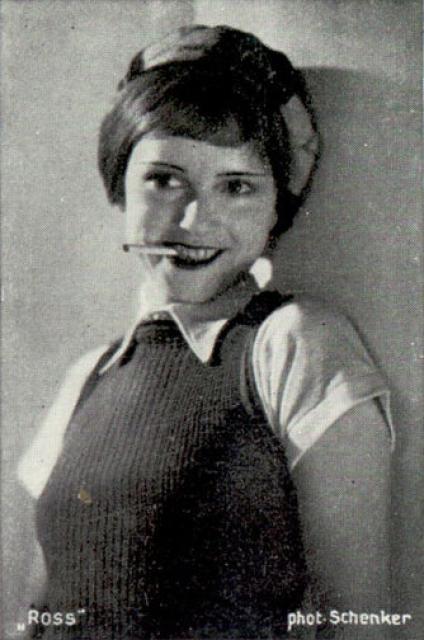
Dolly Haas, an American film and theater actress, began her career in Germany and later emigrated to the United Kingdom and the United States. She was born on April 29, 1910, in a family of Hamburg Jews, Charles Oswald and Margaret Haas. Her father, an immigrant from Britain, was involved in the publishing business, while her mother was originally from Vienna.

From 1917 to 1927, Dolly attended the Jacob Levenberg School, where she also took ballet lessons at the Hamburg City Theater from the age of six. While performing in school plays, Dolly made her first solo performance at the age of ten during a concert. Four years later, she landed a role in the play "Francesca" by German playwright Frank Wedekind. After completing school, Dolly went to Berlin, where she obtained a minor but significant role in the production of "The Mikado." She also performed on the stage of the "Metropol" theater and in cabarets during the same period.

In 1929, she appeared on the stage of the Munich theater, playing the role of Princess Bibi in the adaptation of Oscar Strauss's operetta "Dreams of Waltz." Upon returning to Berlin with Werner Fink and Hans Deppe, she participated in the cabaret "Katakombe." In 1930, Dolly made her film debut in William Dieterle's melodrama "One Hour of Happiness." During this time, she also caught the attention of Anatole Litvak, a budding film director. Their meeting led to the musical sound film "Dolly Makes a Career," which marked Litvak's directorial debut. In this film, Dolly portrayed the role of Dolly Klaren, a choir singer determined to achieve success. The film brought her public recognition and established her as a rebellious young woman. In 1931, she added more films to her repertoire, including "The Ball" directed by Wilhelm Thiele, "The Respectable Sinner," and "The Love Command."
The year 1932 saw Dolly's appearance in four more films. However, in 1933, controversy erupted as the film "The Ugly Girl," in which Dolly, a Jew by nationality, appeared alongside Jewish actor Max Hansen, was met with hissing from the audience due to the growing nationalist sentiments in Germany. In 1934, Dolly was invited to the United Kingdom, where she was offered the leading role in the comedy "Girls Will Be Boys." After returning to Germany, she starred in the film "Why Did Lady Katie Lie?" This film became her final work in Germany, as the nationalist sentiments in the country became increasingly dangerous. In 1936, Dolly emigrated to the United Kingdom.
In her new location, she appeared in the film "Broken Blossoms" and began a romantic relationship with director John Brahm. That same year, she married him and moved to America after being offered a three-year contract by Columbia Pictures. Despite the favorable terms of the contract, Dolly did not receive any roles for two years due to her limited range. Eventually, she moved to New York and returned to the theater scene. She performed in the plays "The Chalk Circle," based on the ancient Chinese drama and adapted by writer Kléber Clamund, and "War and Peace," based on Leo Tolstoy's novel. In collaboration with other German immigrant actors, she also spoke out against the flourishing fascism in Europe.
In 1943, Dolly divorced Brahm and married Eli Girschfeld, a renowned cartoonist for the New York Times. In 1945, she gave birth to their daughter, Nina. During those years, Dolly managed to establish a successful career on Broadway. In addition, she toured America as part of a theater troupe, performing in plays such as "The Threepenny Opera," "The Song of the Lute," and "Crime and Punishment" alongside Lilyan Tashman and John Gielgud. In 1953, she appeared in Alfred Hitchcock's film "I Confess," playing the role of Alma Keller, which marked her final appearance on the silver screen. Twenty years later, in 1975, Dolly received an award for her contribution to the development of German cinema, and in 1983, a retrospective of her films was presented at the Berlin Film Festival. Dolly Haas passed away on September 16, 1994, at the age of eighty-four, due to ovarian cancer.