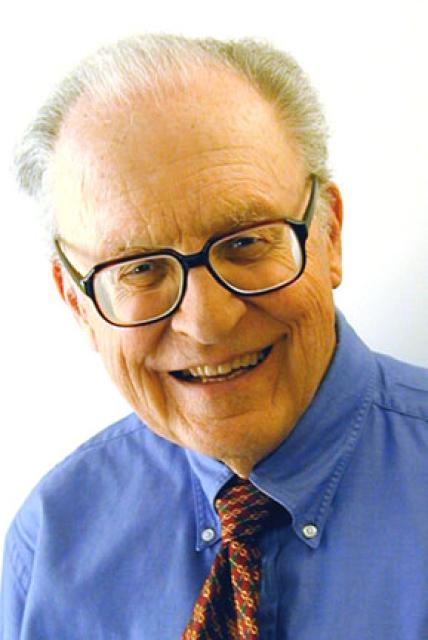
Donald Glazer
 USA
USA- Biography of Donald Glaser
- Early Experiments in Particle Physics
- Invention of the Bubble Chamber and Nobel Prize
- Personal Life and Achievements
Biography of Donald Glaser
Donald Arthur Glaser, an American physicist and neurobiologist, was born in Cleveland, Ohio in a family of Russian immigrants, Lena and William J. Glaser. His father was a wholesale merchant. Glaser received his primary and secondary education in Cleveland Heights schools. A talented musician, he studied violin, viola, and composition at the Cleveland Institute of Music and performed with the local symphony orchestra at the age of sixteen. Showing early aptitude for mathematics, Glaser enrolled at Case Institute of Technology (now Case Western Reserve University), where he graduated in 1946 with a bachelor's degree in physics and mathematics. He then pursued his graduate studies at the California Institute of Technology (Caltech) under the guidance of Carl D. Anderson. In 1950, Glaser earned a doctoral degree in physics and mathematics for his work on the experimental study of high-energy cosmic rays and mesons at sea level. A year before that, upon completing his coursework at Caltech, Glaser was appointed as a physics instructor at the University of Michigan. In 1953, he became an assistant professor, followed by an associate professorship in 1955, and a full professorship in 1957.
Early Experiments in Particle Physics
While at Michigan, Glaser became interested in elementary particles in cosmic rays, which bombard the Earth with immense energy. These particles, when interacting with matter, give rise to new particles that also possess high energy and are typically short-lived. In the 1920s, when C.T.R. Wilson invented his cloud chamber, physicists were able to visualize particle tracks for the first time. The air in Wilson's chamber contained supersaturated water vapor, so an atomic or subatomic particle passing through the chamber would cause condensation of water droplets along its path. These tracks became visible and could be photographed for further analysis. However, the new powerful particle accelerators developed in the 1950s surpassed the capabilities of the traditional cloud chamber detection method. These accelerators propelled particles to energies a thousand times higher than those achievable twenty years earlier. The low gas density in Wilson's chamber meant that fast-moving particles could travel comparatively long distances before decaying or losing their energy. To obtain tracks of such particles in a Wilson chamber, a device over 100 meters long would be required, which was practically impossible to build. Moreover, the low collision frequency between incoming particles and gas atoms limited the number of interactions observable and the number of exotic new particles that could be produced through such interactions. The amount of data that could be collected using a Wilson chamber was limited by its slow response time: short periods during which the chamber could record tracks of incoming particles had to be separated by intervals of at least half an hour required for equipment preparation.
Participating in the construction of several conventional Wilson chambers, Glaser began searching for methods of detecting high-energy particles using denser substances in chambers with larger working volumes. According to Glaser, pressurized superheated liquids could serve as suitable media. He knew that a liquid could be maintained in an unstable state above its normal boiling point for some time. Such a liquid would not spontaneously boil, but boiling could be induced in it. Glaser experimented with bottles of heated beer and carbonated soft drinks to determine if a reactive source affected foaming. Eventually, after more refined experiments and calculations, he discovered that under certain conditions, radiation could "trigger" the boiling of a liquid. For example, if diethyl ether was heated to 140°C (which is significantly above its normal boiling point), it would instantly boil under the influence of radiation - cosmic rays or any other source. Using a set of small glass chambers of various shapes with a working volume of a few cubic centimeters and overheated ether as the working substance, Glaser attempted to accurately determine the tracks of ionizing radiation particles. By heating the liquid under high pressure and rapidly reducing it, he created a highly unstable state and captured clear particle tracks using high-speed photography before the liquid boiled. Glaser's developed method can be seen as a mirror reflection of the Wilson chamber method. While in the Wilson chamber, the track is formed by droplets of liquid in a gas, in Glaser's bubble chamber, the reverse process creates tracks of gas bubbles in a liquid.
Invention of the Bubble Chamber and Nobel Prize
Glaser quickly realized that other liquids would be more suitable for experiments in the field of high-energy physics. He constructed a bubble chamber that used liquid hydrogen at a temperature of -246°C. This installation, completed at the University of Chicago in 1953, soon allowed for the discovery of previously unseen subatomic phenomena. In 1956, Glaser experimented with chambers filled with liquid xenon. The high density of this medium allowed physicists to photograph tracks of both neutral and charged particles and observe many previously unknown reactions. Glaser's hopes were realized: his method allowed for the construction of large bubble chambers with very short working cycles. Such chambers enabled the observation of the behavior of many atomic particles that had not been previously observable, providing thousands of times more information about them. In 1959, as a visiting professor, Glaser spent time at the University of California, Berkeley, and the following year, he became a permanent faculty member there. Over the years 1959-1960, he collected nearly half a million photographs using a new bubble chamber built in Berkeley under the direction of Luis W. Alvarez. Equipped with a cooling system and a large magnet capable of deflecting the trajectories of charged particles, this chamber was the size of a small truck and significantly differed from the 3 cubic centimeter capacity flasks that Glaser had experimented with just seven years earlier.
In 1969, Glaser was awarded the Nobel Prize in Physics "for the invention of the bubble chamber." Introducing the new laureate at the award ceremony, Kai Siegbahn of the Royal Swedish Academy of Sciences said: "Some other scientists have also made significant contributions to the practical realization of various types of bubble chambers, but the fundamental contribution to its creation belongs to Glaser." After receiving the Nobel Prize, Glaser's interest was drawn to the application of physics to molecular biology. In 1961, he conducted research on microbiology at the University of Copenhagen. His subsequent studies focused on bacterial evolution, regulation of cell growth, carcinogens, and genetic mutations. Adapting the photographic analysis setup used in bubble chamber work to the needs of microbiology, Glaser developed a computerized scanning system that automatically identifies bacterial species. Since 1964, Glaser has been a professor of biology and physics at Berkeley.
Personal Life and Achievements
In 1960, shortly after receiving the Nobel Prize, Glaser married Ruth Bonnie Thompson, a graduate student he had met at the Lawrence Radiation Laboratory in Berkeley. They had two children, but their marriage was dissolved in 1969. An athletic person, Glaser enjoys mountaineering, skiing, tennis, and sailing. Throughout his life, he maintains an interest in music and often plays viola in local chamber ensembles. In addition to the Nobel Prize, Glaser has been awarded the Henry Russell Prize from the University of Michigan (1953), the Charles Vernon Boys Prize from the Physical Society of London (1958), and the American Physical Society Prize.


