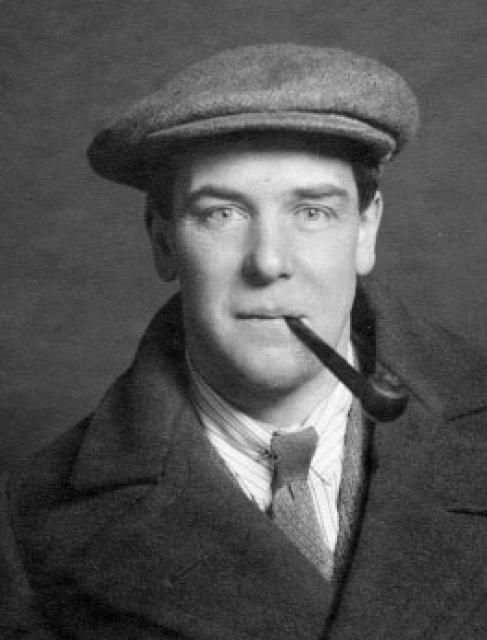
Pyotr Kapitsa
- Pyotr Leonidovich Kapitsa: A Renowned Soviet Physicist
- Collaboration with Rutherford
- Research in Cambridge
- Soviet Connections
- Summoned to the USSR
- Government Decree
- Negotiations and Desperation
- International Intervention
- Internal Resistance and Support
- Academic Petition
- Domestic Propaganda
- Legacy
Pyotr Leonidovich Kapitsa: A Renowned Soviet Physicist
Early Life and EducationPyotr Leonidovich Kapitsa was born on July 9, 1894, into a family with a military lineage. He graduated from the Petrograd Polytechnic Institute in 1919, displaying exceptional scientific aptitude as a student.
Collaboration with Rutherford
In 1921, Kapitsa ventured to Britain and approached the renowned physicist Ernest Rutherford for an internship at the Cavendish Laboratory in Cambridge. Rutherford initially declined due to the laboratory's overcrowding. However, Kapitsa's wit and charming personality, combined with his intellect, impressed Rutherford, who eventually accepted him.
Research in Cambridge
Kapitsa worked at Cambridge for 13 years, conducting groundbreaking research that earned him a doctoral degree in 1923. He established the "Kapitsa Club," a renowned scientific seminar, in 1922. In 1926, he became head of the Magnetic Laboratory and in 1930, began the construction of a state-of-the-art laboratory funded by industrialist Ludwig Mond.
Soviet Connections
Despite his residence in Cambridge, Kapitsa maintained close ties with the Soviet Union. He frequently visited the country, contributing to scientific advancements. He was elected a corresponding member of the Soviet Academy of Sciences in 1929 and played a consultative role at the Ukrainian Physicotechnical Institute (UFTI) in Kharkiv.
Summoned to the USSR
In September 1934, Kapitsa traveled to the USSR with his wife for the Mendeleev Congress. Unknown to him, his exceptional status had raised concerns among Soviet authorities. He was closely monitored by the NKVD, who reported both genuine and fabricated "anti-Soviet" remarks.
Government Decree
On September 16, 1934, a government commission chaired by Politburo member V.V. Kuibyshev decided to ban Kapitsa from leaving the USSR. The decree acknowledged his scientific contributions but accused him of aiding Britain and selling patents to arms companies.
Negotiations and Desperation
Deputy Commissar of Heavy Industry G.L. Pyatakov informed Kapitsa of the decision and attempted to negotiate his cooperation in Soviet research activities. Kapitsa declined, citing his established scientific career in Britain. He grew increasingly desperate as the government refused to let him return to Cambridge.
International Intervention
Kapitsa sought support from prominent scientists, including Rutherford, Paul Langevin, and Albert Einstein. However, their interventions proved largely ineffective. Langevin was hesitant to oppose the Soviet government, while Einstein, concerned about the USSR's potential in countering Hitler, declined to actively support Kapitsa's cause.
Internal Resistance and Support
Despite setbacks, Kapitsa remained determined to secure his release. He considered mobilizing Soviet academics to appeal to high-ranking officials for support. Some academics, including Vladimir Vernadsky and Alexander Krylov, expressed sympathy and denounced the government's decision.
Academic Petition
Kapitsa's father-in-law, Alexander Krylov, approached the president of the Academy of Sciences, A.P. Karpinsky, to seek his intervention with Central Executive Committee chairman Mikhail Kalinin. However, the elderly Karpinsky declined.
Domestic Propaganda
Amidst the turmoil, the newspaper "Izvestiya" published an article by Kapitsa on liquid helium research, falsely suggesting that his situation was stable. Simultaneously, the NKVD spread rumors accusing Kapitsa of espionage.
Legacy
Despite the Soviet government's attempts to ostracize Kapitsa, he remained a revered scientist. He was eventually allowed to resume his research in the USSR, making significant contributions to physics. He was awarded the Stalin Prize twice, the Hero of Socialist Labor twice, and the Nobel Prize in 1978. Kapitsa's legacy as a brilliant scientist who courageously defended his freedom continues to inspire generations.


