Donald Martino
 USA
USA- Donald Martino - A Respected American Composer
- Early Life and Education
- Influence of Luigi Dallapiccola
- Professional Career and Achievements
- Later Years and Legacy
Donald Martino - A Respected American Composer
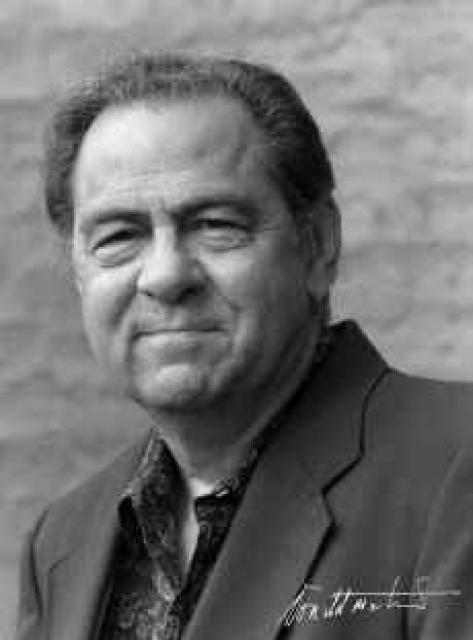
Donald Martino, an American composer and Pulitzer Prize laureate, was one of the most respected composers to emerge in post-World War II America - an era of contradictions, encompassing the allure of the American dream and the rebellion of the new generation. Both of these influences formed the foundation upon which Martino developed his mathematically precise musical structures.
Early Life and Education
Donald Martino was born on May 16, 1931, in Plainfield, New Jersey. At the age of nine, he began studying the art of playing the clarinet, saxophone, and oboe. In high school, he aspired to become a professional clarinetist and started composing his own music at the age of fifteen. In 1948, Martino enrolled at Syracuse University, where he studied composition under Ernst Bacon. After receiving his bachelor's degree in music in 1952, he continued his studies at Princeton University. Initially planning to pursue a degree in history, Martino soon realized that composition appealed to him more than the past centuries and switched to a master's program in fine arts. His main mentors at Princeton were classical composer and educator Roger Sessions and Milton Babbitt, one of the pioneers of electronic music. Martino was awarded the Koussevitzky Fellowship, which allowed him to study at the Tanglewood Music Center, a summer school for outstanding young musicians.
Influence of Luigi Dallapiccola
In 1954, after obtaining his master's degree, Martino became a Fulbright Scholar and traveled to Italy to study under avant-garde composer Luigi Dallapiccola. The mature and highly expressive style of Dallapiccola, who extensively practiced twelve-tone composition, significantly influenced the aspiring composer. Even as an established master himself, Martino continued to use twelve-tone techniques in a significant portion of his works, including "Paradiso Choruses" and "Seven Pious Pieces".
Professional Career and Achievements
Upon his return to the United States in 1956, Martino taught at the Music School Settlement in New York City, played jazz, and composed arrangements. In 1959, he secured a position as a professor at Yale University, where he worked for ten years, while also teaching at Tanglewood during the summers. Throughout this period, the expressive aspects of his music became more prominent, and Martino grew enough in his professional career to add personal elements to the twelve-tone technique, which he had been using since the beginning of his career. This development was a result of his growing admiration for romantic composers. He greatly esteemed the works of Chopin, Schumann, and Verdi, but considered Brahms and Beethoven as role models for a composer.
In 1969, Martino became the chair of the Composition Department at the New England Conservatory of Music. In 1974, he was awarded the Pulitzer Prize in Music for his chamber piece "Notturno" for flute, clarinet, violin, viola, cello, and piano. In 1978, Martino founded the music publishing house "Dantalian, Inc." to release his own works. In addition to contemporary classical music, Martino wrote numerous jazz compositions, 178 harmonizations of J.S. Bach chorales, and several transcriptions for clarinet and piano. Pianist and composer Easley Blackwood claims that Martino's sonata "Pianississimo" is one of the most challenging pieces to perform in the history of music.
In 1980, Martino became a professor of music at Brandeis University, and three years later, he joined Harvard University as a composition professor. He received three Guggenheim fellowships and was elected a member of the American Academy of Arts and Sciences in 1987.
Later Years and Legacy
Donald Martino passed away on December 8, 2005, while en route to Antigua. A memorial concert was held on May 8, 2007, at the New England Conservatory, and the recording of the concert was released in 2009 by the independent label "Navona Records".