Draža Mihailović
- Army career and the invasion of Yugoslavia
- Chetniks, Partisans and the Allies
- Capture and contested legacy
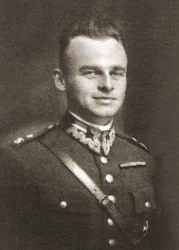
Dragoljub “Draža” Mihailović was a Yugoslav army officer who became the best-known leader of the royalist Chetnik movement during World War II. After the Axis invasion and occupation of Yugoslavia in 1941, he organized armed resistance from the Serbian countryside. The movement’s history, however, was complicated by its growing conflict with the communist-led Partisans and by cooperation between some Chetnik units and Axis forces. Captured after the war, Mihailović was tried and executed by Yugoslavia’s new communist government.
Army career and the invasion of Yugoslavia
Born on 27 April 1893 in the Kingdom of Serbia, Mihailović served in the Balkan Wars and the First World War before pursuing a career in the Royal Yugoslav Army. By 1941 he was a senior officer. When Axis forces invaded and dismembered Yugoslavia in April, he refused to surrender and gathered followers in the Ravna Gora region of Serbia.
His movement, commonly called the Chetniks, professed loyalty to the exiled Yugoslav monarchy and initially fought the occupiers. Mihailović was recognized by the royal government-in-exile as its military representative and became minister of war. His forces operated in a landscape marked by occupation, resistance, and intercommunal and civil conflict.
Chetniks, Partisans and the Allies
Mihailović’s forces and Josip Broz Tito’s communist Partisans briefly cooperated against the Axis, but their alliance broke down in 1941. The groups then fought each other as well as the occupiers. Mihailović prioritized preserving forces for a future struggle and opposed the Partisans’ revolutionary project; Chetnik units consequently fought the Partisans more consistently than they fought German forces.
The wartime record is disputed and varied across regions and units. Some Chetnik formations made arrangements with Italian and German occupiers, at times receiving arms or fighting the Partisans alongside Axis forces. Mihailović’s supporters emphasize his original resistance and the protection his forces provided to Allied airmen. Critics point to collaboration by units under his movement, violence against civilians, and his strategic focus on defeating the Partisans. In 1943, as Allied assessments shifted toward Tito’s forces, Britain and the United States increasingly backed the Partisans.
In 1944, Chetnik forces helped shelter and evacuate hundreds of downed Allied airmen in Operation Halyard. The United States later awarded Mihailović the Legion of Merit, kept secret for years after the war, recognizing the rescue and his wartime service.
Capture and contested legacy
As the Partisans took power, Mihailović went into hiding. Yugoslav authorities captured him in March 1946 and put him on trial in Belgrade for treason and collaboration. He was convicted and executed by firing squad on 17 July 1946. The authorities did not disclose the location of his grave.
In 2015, a Belgrade court annulled the conviction, ruling that the trial had been politically controlled and failed to provide a fair process. The ruling addressed the validity of the proceedings; it did not resolve historical debates about the conduct of the Chetnik movement during the war.
Mihailović remains a deeply contested figure. Some regard him as a royalist resistance leader who saved Allied lives; others stress the movement’s collaboration and crimes, as well as its role in the civil war against the Partisans. His biography reflects the shifting alliances and competing political aims that made wartime Yugoslavia exceptionally complex.