Dylan Bennett
 Great Britain
- A boy's remarkable recovery from a rare disease
- A 'miracle cure'
- A serendipitous connection
- Sharing a story of hope
- Joe's selfless act
- The science behind stem cell transplantation
- Dylan's diagnosis and treatment
- The importance of stem cell donation
A boy's remarkable recovery from a rare disease
Dylan Bennett, a seven-year-old boy from Manchester, has expressed his heartfelt gratitude to Joe Partridge, a 32-year-old father of two, for donating stem cells that saved his life from a rare immune disorder.

A 'miracle cure'
Partridge's stem cells successfully treated Dylan's haemophagocytic lymphohistiocytosis (HLH), a condition in which the body produces an excessive amount of white blood cells that attack vital organs. Dylan received the stem cells in November 2011 at Great Ormond Street Hospital for Children in London.
A serendipitous connection
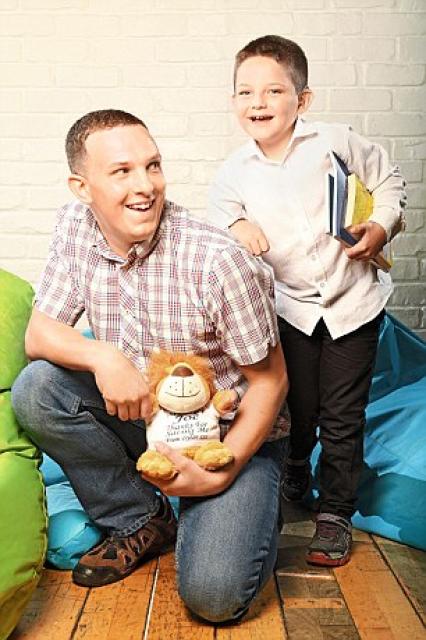
Remarkably, the donor and recipient were complete strangers before the transplant. Dylan and Joe met for the first time, surrounded by their families, in a heartwarming encounter captured on camera by the Anthony Nolan Trust, a charity that supports people with blood cancer and blood disorders.
Sharing a story of hope
Dylan, now healthy and well, received a gift of Roald Dahl's book "George's Marvellous Medicine," a story about a young boy who concocts a magical cure for his grandmother's ailment. "I'm a very good reader now," Dylan remarked with delight.
Joe's selfless act
Partridge, who selflessly donated his stem cells after seeing an appeal at university in 2004, expressed a sense of fulfillment in knowing he could help someone in need. "All I did was spend a day in hospital," he said. "I don't feel I deserve the glory. I just donated some cells that happened to be a tissue match."
The science behind stem cell transplantation
Stem cell transplantation, or bone marrow transplantation, involves extracting stem cells from a donor's blood, which are then infused into the recipient through an IV line. The stem cells travel to the bone marrow, where they multiply and produce new, healthy blood and immune cells. This treatment has proven highly effective in combating certain cancers, particularly leukaemia, and is also used to treat HLH.
Dylan's diagnosis and treatment
Dylan was diagnosed with HLH shortly after his second birthday in May 2011. He was initially admitted to hospital with a swollen abdomen and severe weakness. His condition rapidly worsened, leading to multiple organ failure and a stroke, and he was placed in an induced coma.
After being transferred to Great Ormond Street Hospital, Dylan's doctors determined that a stem cell transplant was his only hope. His brother, Eric, then six, agreed to be a donor, but their tissues were not compatible. It took only a few weeks to find an ideal match for Dylan, whose transplant was successful and he has been in remission for the past four years.
The importance of stem cell donation
Partridge's journey as a stem cell donor began with a saliva sample, which was used to establish his blood type and genetic profile. When a patient with blood cancer or a serious blood disorder requires a stem cell transplant, the Anthony Nolan Trust searches its database for a suitable match.
Donors and patients can choose to meet each other if both parties sign consent forms. Joe remained unaware of his recipient's identity until Catherine wrote him an anonymous thank-you letter a couple of years ago. They only made direct contact this year.
"It was a relief to find out my cells had worked and that I had helped a little boy," Partridge said. "I'm a father myself, you see."
In the UK, the chance of finding a suitable stem cell donor is 1 in 900. The need for more donors is crucial to improve this low ratio, as around 2,000 people in the UK require a donor stem cell transplant each year.


