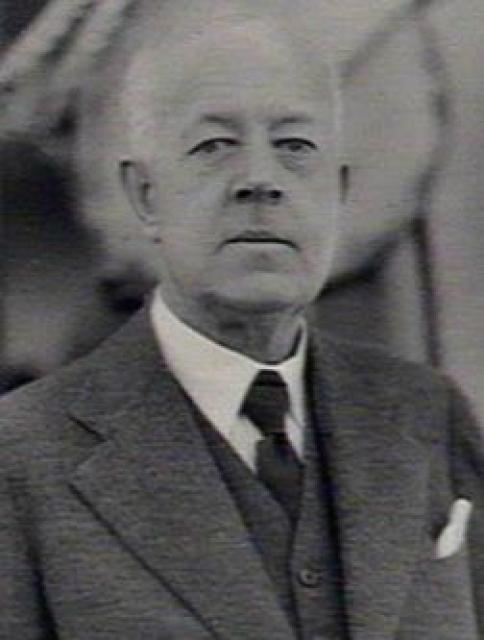
Edgar Leslie Bainton
 Great Britain
- Biography of Edgar Leslie Bainton
- Teaching and Career
- Imprisonment and Return to Music
- Time in Australia and Later Years
Biography of Edgar Leslie Bainton
Early Life and EducationEdgar Leslie Bainton, an English composer best known for his church music, was born in Hackney, London, to Reverend George Bainton and his wife Mary Cave. The family later moved to Coventry, where Edgar began showcasing his musical abilities. He started playing the piano and performed in public at the age of 9. In 1891, he received a scholarship to study music at a school in Coventry and later attended the Royal College of Music, where he studied music theory under Walford Davies and composition under Charles Villiers Stanford. Bainton also formed lifelong friendships with George Dyson, William Harris, and Rutland Boughton during his time at the college.
Teaching and Career
In 1901, Bainton began teaching piano at the Tyne Conservatory of Music in Newcastle. However, teaching was not his only focus; he was an influential figure in the local music scene, actively composing, performing, and conducting. In 1905, Bainton married one of his former students, Ethel Eales, and they had two daughters together. In 1912, he became the director of the conservatory, which allowed him to expand his musical pursuits. Bainton lived with his wife in Stocksfield, near Hexham, and often enjoyed walks in the surrounding areas with Wilfred Gibson. Through Gibson, Bainton gained valuable connections in local literary circles, including Gordon Bottomley, whose poetry he used as the basis for some of his works.
Imprisonment and Return to Music
In the summer of 1914, Bainton decided to attend the Bayreuth Festival in Germany. Unfortunately, he chose a highly inconvenient time to visit, as the war broke out shortly after his arrival, leading to his arrest and internment in a prisoner of war camp. Despite his circumstances, Bainton continued to engage with music in the camp, serving as the musical director of a theater. However, his health deteriorated to a critical point by March 1918. Nonetheless, he managed to endure the hardships of captivity and, after regaining his health, returned to his passion for music.
Time in Australia and Later Years
In 1933, Bainton received an unusual invitation to work at The New South Wales State Conservatorium of Music in Australia. He introduced Australians to unfamiliar music during his time there. When Bainton turned 65 in 1945, he reached retirement age according to Australian laws. However, he continued to pursue music for many more years. It wasn't until 1956 that his old illness resurfaced, leading to his passing on December 8 of that year.