
Edith Shtain
 Poland
Biography of Edith Stein
Edith Stein was a philosopher, Carmelite nun, and Jewish martyr, who was burned in Auschwitz during the Holocaust. Born in 1891 in Breslau, she came from a traditional Jewish family involved in the timber trade. From an early age, Edith's thoughts diverged from the business concerns of her family. Instead, she sought the absolute Truth. As she grew older, she realized that the religions she knew did not lead her to the Truth she desired.
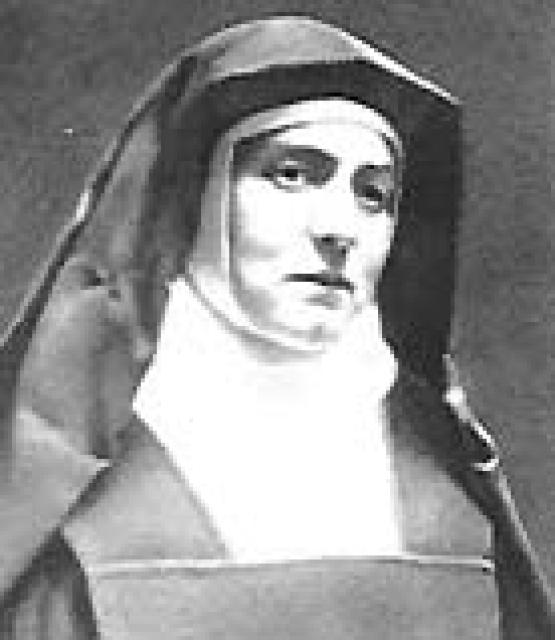
After completing school, Edith pursued philosophy, a field that seemed impractical to others. However, for her, philosophical inquiry was essential to understanding the essence of existence. Her talents did not go unnoticed, and she became one of the closest disciples of Edmund Husserl, the founder of phenomenology. Through phenomenology, Edith discovered new approaches to understanding the nature of the world.
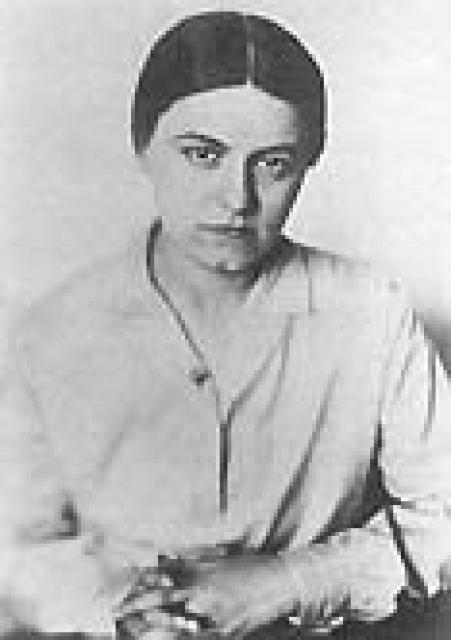
However, the human suffering caused by World War I disrupted her philosophical pursuits. Edith temporarily set aside her studies to serve as a nurse in military hospitals. During this time, she witnessed a street vendor entering a cathedral, kneeling, and praying. This act of individual devotion to God challenged Edith's constant search for absolute Truth.
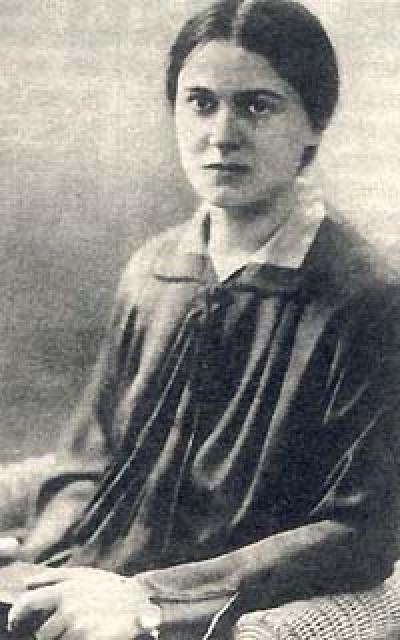
Her hope of finding the Truth and encountering God was fulfilled when she read the autobiography of Saint Teresa of Avila. Inspired by the deep inner prayer life of this Spanish nun, Edith converted to Catholicism and was baptized on the day commemorating the circumcision of Jesus. She saw her philosophical work as a form of prayer and service to God and humanity.
Edith Stein became a nun in the ancient Carmelite convent in Cologne, Germany, which had a three-century-long history. However, the rise of the Nazi regime in 1933 pushed her to confront her Jewish identity and the fate of her people. She sent a letter to Pope Pius XI, urging him to speak out against the persecution of the Jews. In response, she received a private letter blessing her efforts.
On August 2, 1942, two SS officers arrived at the monastery gates. They took Edith and her sister Rosa, who had also converted to Catholicism, to a collection point. On August 7, they were transported to Auschwitz along with 987 other Jews. The entire group was sent directly from the train to the gas chambers. Miraculously, a few witnesses remembered the two nuns among the victims.
Edith Stein's life ended tragically in the smoke of the Auschwitz crematorium. She famously said to her sister as they were taken away, "Come, let us go for our people." She remained a Jew and became a Christian, embodying the profound contradiction of two millennia.
In Cologne, a memorial was erected in honor of Edith Stein. The sculpture depicts her in three forms: a sitting girl contemplating her future path, a woman scholar with a split head symbolizing her struggle to reconcile science and faith, and a nun walking on a narrow stony path. But the path she walks intersects with a pile of shoes – the shoes Jews were forced to remove before entering the gas chambers. Thus, her memorial represents the shared pain and hope of our history.
When passing by the busy shopping street, few people notice the modest memorial plaque, which encapsulates the pain and hope of our collective history. Two years ago, Pope John Paul II canonized Edith Stein as a saint, making her the 280th saint in the Catholic Church's history. Her sainthood, however, is unique among her fellow saints as she was a Jewish martyr.




