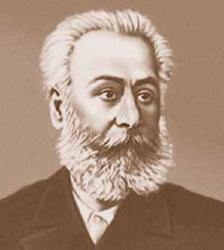
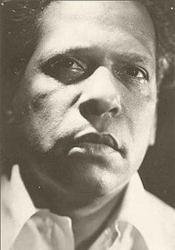
Edmund Spencer
 Great Britain
Biography of Edmund Spenser
Edmund Spenser, an English poet and contemporary of Shakespeare, is considered a classic of English literature. He was often referred to as the "Poet's Poet" and was admired by Lord Byron, Alfred Lord Tennyson, and John Keats. Spenser worked in a unique style of his own, which later became known as the "Spenserian stanza".
Edmund Spenser was born around 1552 in London. He attended Merchant Taylors' School and later received a scholarship from Pembroke College, Cambridge. It was in Cambridge where he met and became close with Gabriel Harvey, despite their differing views on poetry. In the summer of 1580, Spenser visited Ireland as a representative of Lord Deputy Arthur Grey de Wilton. He later served in the English army. Although he was rewarded with land after the defeat of the Irish, it was soon confiscated, and he only received a pension in 1591. During this time, he tried to secure a position at court through his acquaintance Walter Raleigh, but was unsuccessful.
In the early 1590s, Spenser wrote a prose work titled "A View of the Present State of Ireland", which remained unpublished until the mid-17th century. It is believed that Spenser never attempted to publish the pamphlet during his lifetime because its contents were considered provocative. In it, he wrote that England would never leave Ireland alone until it destroyed Irish traditions, culture, and language. He also discussed the possibility of using scorched-earth tactics. Today, the work can only be viewed as incitement to genocide.
In 1598, during the Nine Years War, Irish forces led by Hugh O'Neill expelled Spenser from his home, and even his castle was burned down. Left homeless and without means of survival, he went to London, where he died in extreme poverty at the age of 46.
Today, Edmund Spenser is considered a classic of English literature. He was admired by Lord Byron, Alfred Lord Tennyson, and John Keats. He worked in a completely unique style of his own, which later became known as the "Spenserian stanza". His poem "Epithalamion" gives the best representation of his work. Other notable works by Spenser include the unfinished poem "The Faerie Queene", and the poems "Prothalamion" and "Fowre Hymnes". "The Faerie Queene" is considered his most outstanding work.