Edouard Mane
 France
Biography of Edouard Manet
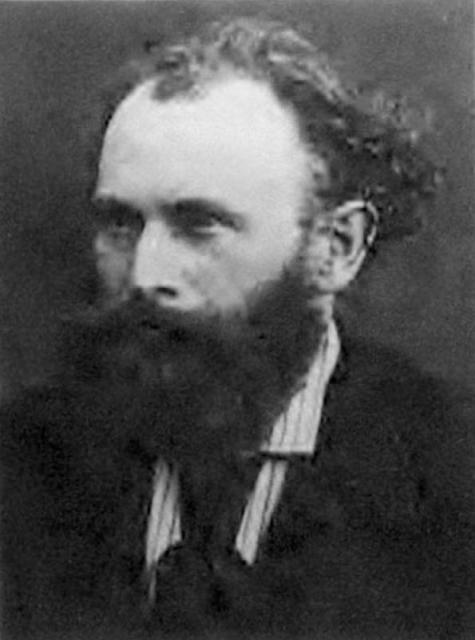
Edouard Manet was a French artist and one of the pioneers of Impressionism. He was born on January 23, 1832, in Paris, into a family of a high-ranking government official. From 1850 to 1856, he studied at the School of Fine Arts in Paris under Thomas Couture (1815–1879), one of the most renowned French academic painters of the time.
Manet constantly clashed with his teacher, as he aimed to capture the "true daylight" and portray life as it is. He believed he achieved this goal in his painting "The Absinthe Drinker" (1859, Copenhagen, Ny Carlsberg Glyptotek). Another painting in the same dark color palette as "The Absinthe Drinker" is "Music in the Tuileries" (1860, London, National Gallery), which depicts a charming portrait of Parisian society, including members of Manet's own family, friends, and acquaintances such as J. Offenbach, C. Baudelaire, and T. Gautier.
In 1863, Manet created his first major work, "Luncheon on the Grass" (Paris, Musée d'Orsay), a painting filled with light. The composition of the central group in this painting was criticized for being based on a print by Marcantonio Raimondi, which was made from a drawing by Raphael, giving it a modern look. The painting also received backlash for daring to depict clothed men next to a completely nude woman. In the same year, Manet painted "Olympia" (Paris, Musée d'Orsay), which portrays a reclining naked woman with a servant girl offering a bouquet of flowers. This subject matter drew inspiration from Goya, Titian, and Giorgione, and the painting faced fierce criticism when exhibited at the Salon in 1865.
In 1866, Manet formed a friendship with the Impressionist painter Claude Monet. Together with Camille Pissarro, Alfred Sisley, Edgar Degas, Paul Cézanne, and Pierre-Auguste Renoir, they formed a group with Manet as its leader. Under the influence of the Impressionists, Manet's color palette became lighter, although he did not adopt their technique of applying additional colors to the canvas using brushstrokes.
One of his works during this period is "The Flute Player" (1866, Paris, Musée d'Orsay), which depicts a young infantryman playing the flute. It may have served as a preparatory work for his painting "The Execution of Emperor Maximilian of Mexico". There are four versions of this composition: in the Museum of Fine Arts, Boston; in the National Gallery, London; in the National Gallery of Denmark, Copenhagen; and in the Kunsthalle Mannheim. This painting surpasses all contemporary historical works in terms of precise realism and unbiased artistic interpretation.
"The Studio Boat" (1874, Munich, Neue Pinakothek) depicts Manet's friends Monet and his wife in a boat they called the "floating studio." In the same year, he created the painting "Evening" (Turner, Musée des Beaux-Arts) which also features two figures in a boat. Other major works of this period include "Nana" (1876–1877, Hamburg, Kunsthalle), "Portrait of Monsieur and Madame Auguste Manet in the Conservatory" (1879, Berlin, National Gallery), and "At the Brasserie L'Abbaye de Liège" (1879, Turner, Musée des Beaux-Arts). In these works, Manet's art reached its greatest maturity and perfection, becoming more direct, self-sufficient, simple, natural, and contemporary.
From 1879, Manet often painted portraits of friends and still lifes. His last period of artwork includes many pastel works. His final major work was "A Bar at the Folies-Bergère" (1881, London, Courtauld Institute), in which he depicted a young woman behind the bar counter, unintentionally creating an image of depersonalization and emptiness of urban life. Manet also planned to create a series of allegorical paintings representing the four seasons, with each season personified by one of his female friends. However, he only completed two paintings: "Spring" (1881, private collection) modeled by Jeanne Demarsy, and "Autumn" (1882–1883, Nancy, Museum of Fine Arts) with Marie Léran as the model. These richly colored paintings capture a sense of fullness of life with extraordinary mastery.
Edouard Manet passed away on April 30, 1883, in Paris. Among his students were his sister-in-law Berthe Morisot and Eva Gonzalès.