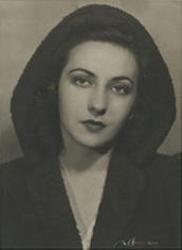
Eduard Erdmann
 Latvia
Early Life and Education
Eduard Erdmann was born on May 5, 1896, in Cesis, Livonia (present-day Latvia). He was the grandnephew of the philosopher Johann Eduard Erdmann. Erdmann began studying music in Riga, under the tutelage of Bror Möllersten, Jean du Chastain, and Harald Creutzburg. In 1914, he moved to Berlin to continue his studies, studying piano under Conrad Ansorge and composition under Heinz Tiessen.
Musical Career
In the 1920s and 1930s, Erdmann was widely regarded as one of the foremost German composers. He was also renowned as a concert pianist, frequently performing works by Beethoven and contemporary composers. In 1925, he gave the first performance of Artur Schnabel's "Piano Sonata" at the Venice ISCM Festival.
Erdmann collaborated closely with the Austrian violinist Alma Moodie from 1921 to 1943. He dedicated his "Sonata for Solo Violin, Op. 12" to her, and she gave its premiere performance. In 1925, Erdmann was appointed professor at the Cologne Academy of Music, but he was forced to resign by the Nazis in 1935.
Nazi Affiliation and Post-War Career
During the Nazi era, Erdmann joined the party in 1937 out of fear of persecution. However, this affiliation damaged his reputation after the war, and he was unable to fully rehabilitate himself.
In 1950, he began teaching piano at the Hochschule für Musik in Hamburg, where he remained for eight years. Erdmann's students included Alfons and Aloys Kontarsky.
After the war, he resumed composing, but his music received little attention. In 2006, the CPO record label released a series of CDs featuring his orchestral works.