Eduard Joseph D'Alton
 Ireland
- Early Life and Career
- Artistic and Academic Endeavors
- Comparative Osteology
- Academic Appointments
- Artistic Legacy
Early Life and Career
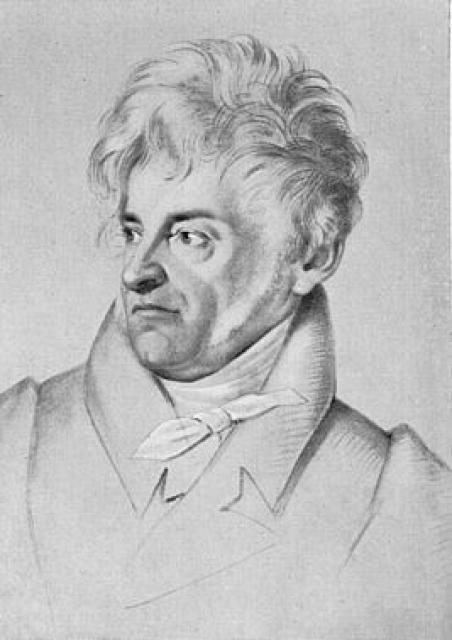
Johann Wilhelm Eduard d'Alton was born on August 11, 1772, in Aquileia. Raised in Vienna, he pursued archaeology, anatomy, drawing, and engraving (etching) in Italy.
Artistic and Academic Endeavors
In the early 19th century, d'Alton resided in Jena and Weimar, befriending renowned figures of the time. Grand Duke Carl August commissioned him to prepare the first part of his "Naturgeschichte des Pferdes" (Bonn, 1810), a lavish publication featuring d'Alton's own illustrations and engravings.
Comparative Osteology
Collaborating with Döllinger and Pander in Würzburg, d'Alton contributed to research on chicken embryo development. He created engravings for Pander's book on the subject. Together, they embarked on a significant publication illustrating comparative animal osteology, prompting them to travel to Europe, including Paris, the Iberian Peninsula, England, and Scotland.
Academic Appointments
During his travels, d'Alton was appointed an extraordinary professor in 1818 and later an ordinary professor of archaeology and art history at the University of Bonn. Upon his return, he initiated the publication of his "Vergleichende Osteologie," the first part of which was completed (12 issues, Bonn, 1821-31).
Artistic Legacy
Johann Wilhelm Eduard d'Alton passed away on May 11, 1840, in Bonn. His collection of engravings was acquired by the University of Bonn. D'Alton's engravings, characterized by their Rembrandt-esque style or meticulous precision, earned him membership in the Berlin Academy of Arts. Notably, he pioneered chalk drawing on stone, which was printed by André in Offenbach.