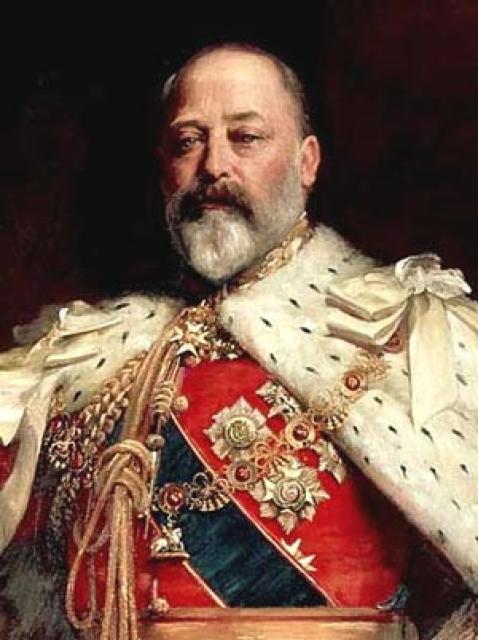
Eduard VII
 Great Britain
Biography of Edward VII
Edward VII (1841–1910) was the King of the United Kingdom and Ireland. He was born on November 9, 1841 in London, the eldest son of Queen Victoria and Prince Albert. As the Prince of Wales, he received a strict upbringing with a rigorous schedule, aimed at shaping him into a strong individual. He was educated in various subjects, including ancient and European languages, literature, geography, and the arts.
During his youth, Edward's attractive appearance, expressive eyes, and charming manners made a lasting impression on the women of society. However, his indulgent lifestyle and reputation for casual relationships worried his parents, who believed it could bring difficulties to the monarchy and the country as a whole.
As his mother's reign progressed, Edward became involved in public affairs, including work in royal commissions on social issues. He also undertook military service and had a keen interest in the army. Despite his reputation for a carefree lifestyle, he showed leadership qualities and made positive contributions in various areas of domestic and foreign policy during his reign.
Edward became king at the age of 59. His reign saw a revitalization of ceremonial functions and restored the grandeur that had been somewhat lost during Queen Victoria's mourning period after the death of Prince Albert. He pursued initiatives and demonstrated independence in some areas of policy, although he primarily operated within the confines of constitutional monarchy.
Edward's main interests were foreign affairs, military matters, and naval issues. He made numerous visits abroad, establishing good relationships with foreign leaders. He became known as the "Uncle of Europe" for his connections with European monarchs. He was the first British monarch to visit Russia, and his visit helped foster a friendly Anglo-French agreement.
Edward's reign also saw growing tensions with Germany, particularly due to his personal animosity towards Kaiser Wilhelm II. Despite this, he demonstrated diplomatic skills and was able to establish alliances and promote British interests.
Edward suffered from bronchitis, which plagued him throughout his life. In May 1910, his health deteriorated, and he passed away in London. Edward VII left behind a legacy of diplomatic achievements and improvements in the role of the monarchy, playing a significant role in shaping the British empire and its relations with other countries.


