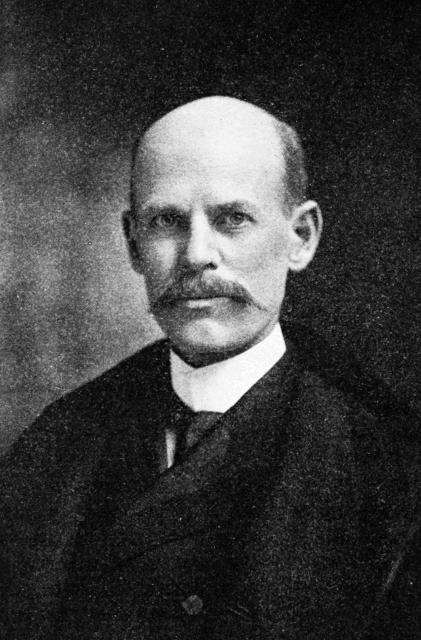
Edward Acheson
 USA
USA- Edward Goodrich Acheson - American Chemist
- Early Life and Education
- Career and Inventions
- Legacy and Recognition
Edward Goodrich Acheson - American Chemist
Edward Goodrich Acheson (March 9, 1856 – July 6, 1931) was an American chemist. He is best known as the inventor of the "Acheson process" - a technique for producing silicon carbide (carborundum). This technique was a breakthrough for its time and is still used in industry today. Silicon carbide is actively used in semiconductor circuits, as an abrasive material, and for creating synthetic gemstones. We owe the efficient technique for producing this material, which is still used in industry today, to one inventor - Edward Acheson.
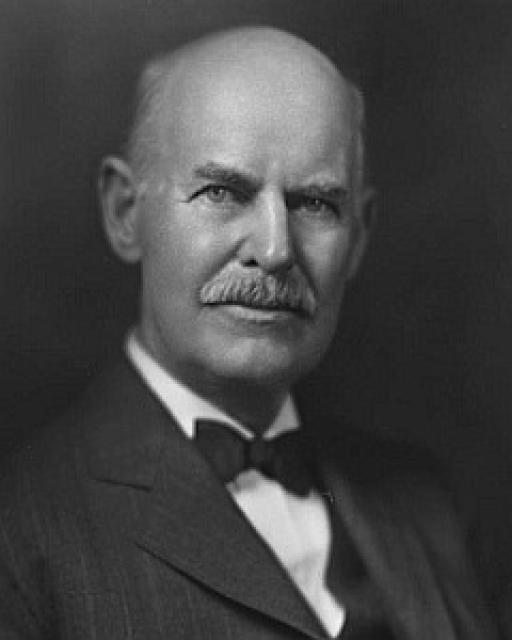
Early Life and Education
Acheson was born in Washington, Pennsylvania. He attended Bellefonte Academy for three years, which marked the end of his formal education. Afterward, Acheson worked as an assistant surveyor for the Pittsburgh Southern Railroad. However, he eventually found a more interesting job when he was hired by Thomas Edison to work in one of his laboratories. Acheson worked in Menlo Park, New Jersey, under the supervision of John Kruesi. His main task was to find conductive carbon filament suitable for use in electric light bulbs.
Career and Inventions
In 1884, Acheson left Edison and joined a factory that produced electric light bulbs. During this time, Acheson also worked on producing artificial diamonds. He experimented with various heating and chemical treatment schemes. Although he did not achieve his initial goal, his experiments yielded interesting results. By heating a mixture of clay and coke in an iron bowl using a carbon electrode, Acheson was able to obtain shiny hexagonal crystals. These crystals, essentially silicon carbide, were named carborundum by Acheson.
Upon Edison's advice, Acheson built his own electric plant in Port Huron in 1891, where he continued to experiment with the new material. On February 28, 1893, Acheson was granted a patent for an extremely efficient abrasive material.
Throughout his career, Acheson obtained around 70 patents related to various abrasives, graphite processing products, oxidation reduction schemes, and many other useful engineering tasks.
Legacy and Recognition
Edward Acheson passed away on July 6, 1931, in New York City. In 1997, he was inducted into the National Inventors Hall of Fame. The inventor's house in Monongahela, Pennsylvania, is currently recognized as a National Historic Landmark.




