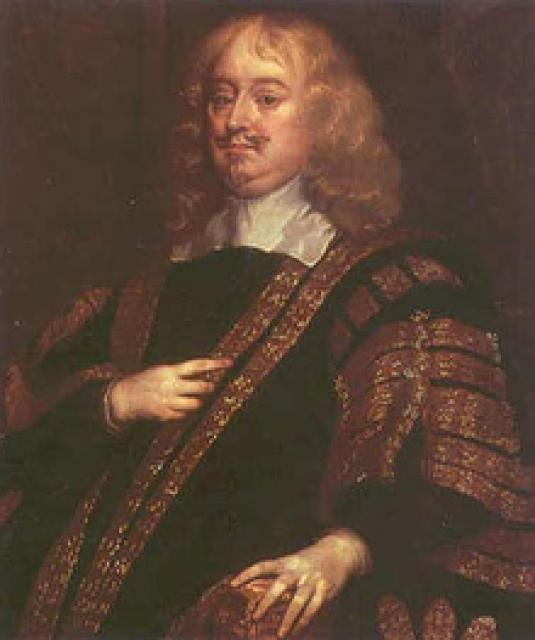
Edward Clarendon
 Great Britain
- The Early Life and Legal Career of Edward Hyde
- The Political Divide and the Support of the King
- The Civil War and Service to the Monarchy
- The Restoration and Rise to Prominence
- The Decline and Fall from Grace
- Historical Writings and Legacy
- The Hyde Family Dynasty
The Early Life and Legal Career of Edward Hyde
Born in Dinton, Wiltshire, on February 18, 1609, Edward Hyde received an education at Oxford and studied law at the Middle Temple. In 1633, he was called to the bar and became a member of both the Short and Long Parliaments in 1640.
The Political Divide and the Support of the King
Hyde initially supported the opposition and advocated for the impeachment of the king's advisor, the Earl of Strafford. However, he opposed attacks on the Anglican Church and, in January 1642, abandoned the opposition to join the king.
The Civil War and Service to the Monarchy
During the Civil War, Hyde served as one of the king's most trusted advisors. In 1645, he became a guardian and tutor to Charles, Prince of Wales (later Charles II). Despite his opposition to Queen Henrietta Maria, Charles II continued to value his counsel.
The Restoration and Rise to Prominence
In 1658, Hyde was appointed Lord Chancellor, a position he took up in 1660. The same year, he was created Earl of Clarendon. As Charles II's Chief Minister, Clarendon oversaw the government's affairs.
The Decline and Fall from Grace
Clarendon's popularity declined after the failure of the Second Anglo-Dutch War. In 1667, he faced impeachment and was forced to resign his post. He fled to France in November 1667 and spent the remainder of his life in exile.
Historical Writings and Legacy
Clarendon's literary contributions include "History of the Rebellion and Civil Wars in England," a masterpiece of historical writing with vivid portraits of key figures. He also penned an autobiography, "The Life of Edward, Earl of Clarendon."
The Hyde Family Dynasty
Clarendon's daughter, Anne Hyde, married James, Duke of York, in 1660. Their daughters, Mary and Anne, became queens of England. The Hyde family continued to play a significant role in British politics throughout the 18th century.