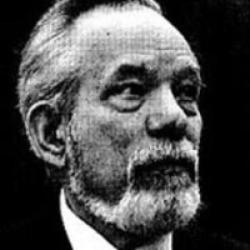
Edward Dannreuther
 Great Britain
- Early Life and Education
- Debut and Concert Career
- Proponent of Wagner
- Teaching and Writing
- Later Years and Legacy
Early Life and Education
Edmund Dannreuther was born in Strasbourg, Alsace on December 13, 1844. His father, Gustav, was a piano manufacturer who moved the family to Cincinnati, Ohio when Edmund was a young boy. In Cincinnati, Edmund's musical talents were nurtured, and he began studying piano at an early age.
In 1860, at the age of 16, Dannreuther enrolled in the Leipzig Conservatory, where he studied piano with Ignaz Moscheles and Moritz Hauptmann. He also received private lessons from Franz Liszt, one of the most renowned pianists of the time.
Debut and Concert Career
In 1863, Dannreuther made his London debut, performing Beethoven's Fourth Piano Concerto and Chopin's Second Piano Concerto. He quickly gained recognition for his virtuosic playing and his keen understanding of music.
Throughout the 1860s, Dannreuther embarked on concert tours, including an American tour with Carl Rosa and Euphrosyne Parepa. He wrote articles about his experiences for Charles Dickens' magazine, "All the Year Round," providing insights into the musical landscapes of the time.
Proponent of Wagner
Dannreuther became a staunch advocate for the music of Richard Wagner. In 1872, he co-founded the London Wagner Society and later served as its president from 1895. He organized the Wagner Festival in London in 1877, hosting the composer himself at his home.
Dannreuther published several books on Wagner, including "Richard Wagner: His Tendencies and Theories" and "Richard Wagner and the Reform of the Opera." He also translated Wagner's writings on music into English, including "The Art-Work of the Future," "Beethoven," and "On Conducting."
Teaching and Writing
In 1895, Dannreuther was appointed Professor of Piano at the Royal College of Music. He taught a diverse group of students, including Hubert Parry, James Friskin, William Hurlstone, and John Alexander Fuller Maitland.
Dannreuther made significant contributions to musicology. He wrote the sixth volume of the "Oxford History of Music," covering the Romantic era from Weber to Wagner. He also wrote numerous articles for Grove's Dictionary of Music and Musicians, including a 29-page article on Wagner.
Later Years and Legacy
Dannreuther passed away in Oxford, England on October 12, 1905. He is remembered as a brilliant pianist, a passionate advocate for new music, and a significant figure in the musical landscape of his time. His writings and teachings continue to influence musicians and scholars today.