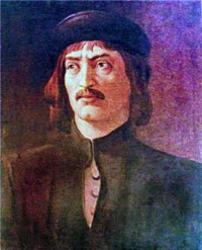
Edward Evan Evans-Pritchard
 Great Britain
Biography of Edward Evan Evans-Pritchard
Edward Evan Evans-Pritchard was a British social-cultural anthropologist and the founder of political anthropology. He completed his education at Winchester College, Exeter College, Oxford University, and the London School of Economics, where he was influenced by Bronislaw Malinowski. Evans-Pritchard's first field expedition was to study the Zande people in Southern Sudan. Following Malinowski's canon of ethnographic research, he learned the Zande language, lived in their village, and even consulted local witch doctors and diviners, following their instructions.
After a period of teaching at the London School of Economics, Evans-Pritchard embarked on a study of the Nuer people in 1930. Despite the difficulties in establishing contact with the Nuer (the British colonial administration and the Nuer were effectively at war), he managed to gain the trust of the tribe. To earn the respect of Nuer cattle herders, he even acquired several cows. In addition to the Zande and Nuer, Evans-Pritchard also collected significant ethnographic material on the Anuak, Luo, Shilluk, and Bedouin peoples.
In 1932, he began working at the University of Cairo, where he met Meyer Fortes and Alfred Radcliffe-Brown and was influenced by their theoretical ideas. In addition to Malinowski and Radcliffe-Brown, Evans-Pritchard was significantly influenced by the French sociological school. His two monographs and the collection "African Political Systems," published in 1940, laid the foundations for political anthropology.
During World War II, Evans-Pritchard attempted to join the active army. When he was rejected, he managed to persuade Sudanese tribes to support the British Empire against Italian-occupied Ethiopia. In 1944, he converted to Catholicism. After the war, he taught at Cambridge and Oxford universities, primarily focusing on teaching and desk research. In 1946, he became the head of the Department of Social Anthropology at the University of Oxford, succeeding Radcliffe-Brown.
Evans-Pritchard studied religion, magic, kinship systems, marriage, political systems, perception of space and time, and other aspects of culture within African tribes. He made the greatest contribution to the study of magic, demonstrating through the Zande and Nuer examples that magic has rational content and often serves to relieve tension in society. He rejected most earlier theories of the "primitiveness" of religions, considering them speculative and unsupported by ethnographic evidence. Evans-Pritchard also argued that anthropology should be classified as a humanities discipline rather than a natural science and believed that it should closely interact with historical research. In his work "The Sanusi of Cyrenaica," Evans-Pritchard attempted to synthesize social-cultural anthropology and history.
Despite being traditionally identified as a representative of structural functionalism, his ideas were in serious contradiction with Alfred Radcliffe-Brown's main tenets, and he had negative opinions about Bronislaw Malinowski. He stated that Malinowski's contribution to the field was more negative than positive and spoke reservedly about Radcliffe-Brown, praising his clear theoretical definitions and his ability to always select the appropriate term.