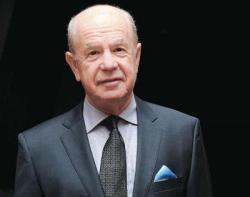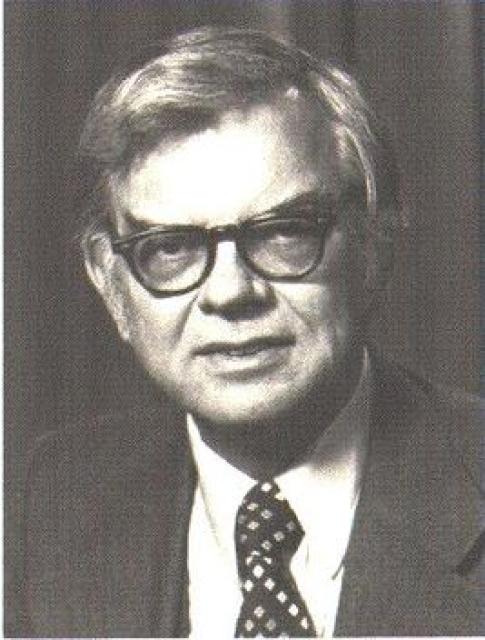
Edward F. Denison
 USA
Edward F. Denison was an American economist who helped develop the national income statistics used to describe the U.S. economy and became one of the leading analysts of long-term economic growth. His research asked a practical question with far-reaching implications: how much of rising output came from more workers and capital, and how much from education, technology, and other changes that made the economy more productive?
Education and Government Service
Denison was born in Omaha, Nebraska, on December 18, 1915. He graduated from Oberlin College and earned a doctorate in economics from Brown University, where he also taught. In 1941 he moved to Washington to join the National Income Division of the federal Office of Business Economics, the predecessor of today’s Bureau of Economic Analysis.
During the 1940s and early 1950s, Denison helped develop and refine the official national income and gross national product accounts. These measures gave policymakers and researchers a more systematic way to track production and income across the whole economy. In 1945 he also worked on the U.S. Strategic Bombing Survey of Germany.
In 1956, Denison left government for the Committee for Economic Development, a business organization engaged in public policy research. He joined the Brookings Institution in 1962 and spent most of the next sixteen years there, producing a series of influential studies. After retiring from Brookings in 1978, he returned to the Bureau of Economic Analysis, serving as associate director for national economic accounts until 1982.
Measuring the Sources of Growth
Denison’s research helped make growth accounting a central tool in the study of productivity. Rather than treating economic growth as a single number, he divided it into measurable contributions from factors such as labor, capital, education, shifts of workers between industries, and advances in knowledge and technology. His method showed researchers how much could be explained by measured inputs and how much remained in a residual associated with productivity gains and factors that were harder to measure.
His 1962 study, “The Sources of Economic Growth in the United States and the Alternatives Before Us,” applied this approach to the American economy. In “Why Growth Rates Differ” (1967), he compared postwar experience across nine Western countries, asking why output and productivity advanced at different rates. Later studies examined Japan and Europe, as well as changes in U.S. growth over time. His work helped direct attention to education and the changing quality of labor as contributors to economic performance.
Legacy
Denison’s careful comparisons gave economists and public officials a way to examine the ingredients of growth rather than relying on broad claims about prosperity. His estimates could not settle every question about what caused productivity to rise, but they made the debate more precise and comparable across countries and periods.
He died at his home in Washington, D.C., on October 23, 1992, at the age of 76. His work remains a foundation for the measurement of national output and the empirical study of long-run economic growth.