William Beveridge
 Great Britain
- Biography of William Beveridge
- The Beveridge Report
- Early Life and Education
- Social Reforms and Career
- Humanitarian Efforts
- The Beveridge Legacy
- Personal Life and Death
Biography of William Beveridge
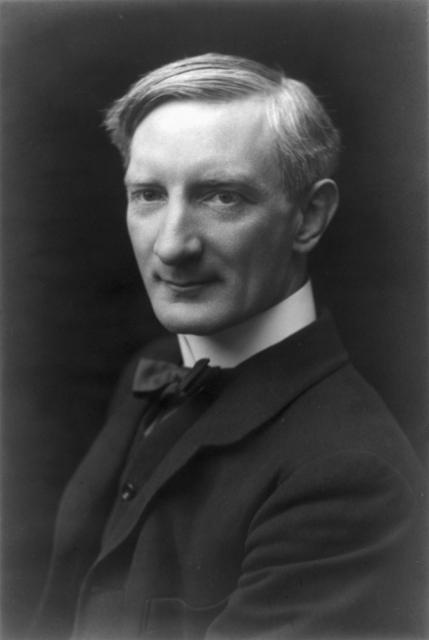
William Henry Beveridge was a prominent British economist, progressive reformer, and social reform advocate. He was widely regarded as an authority on unemployment insurance throughout his career. Beveridge served under Winston Churchill in the Board of Trade as the head of the newly created Labour Exchange and later became the Permanent Secretary of the Ministry of Food. From 1919 to 1937, he served as the Director of the London School of Economics and Political Science before becoming the Master of University College, Oxford.

The Beveridge Report
Baron Beveridge is best known for his 1942 report titled 'Social Insurance and Allied Services,' commonly referred to as 'The Beveridge Report.' This report outlined the principles behind the creation of a new model welfare state that aimed to eradicate the five evils of society – idleness, ignorance, disease, squalor, and want. The report received significant support after World War II, although some of its ideas, such as economic dependence of wives on husbands, faced criticism.

Early Life and Education
William Henry Beveridge was born on March 5, 1879, in Rangpur, India (now Bangladesh). He attended the prestigious Charterhouse School and later Balliol College, Oxford. While studying law, Beveridge developed a genuine interest in social services and wrote an article on the topic for the 'Morning Post' newspaper.

Social Reforms and Career
Beveridge's genuine interest in the causes of unemployment began in 1903 while working at Toynbee Hall, a settlement house in London. It was here that he became acquainted with Sidney and Beatrice Webb, and adopted their theory of social reform. He actively advocated for the introduction of old-age pensions, free school meals, and campaigned for a national labor exchange system. By 1908, Beveridge had become the leading expert in the United Kingdom on unemployment insurance. However, in 1919, he left the civil service to become the Director of the London School of Economics and Political Science.
Humanitarian Efforts
In 1933, Beveridge played a significant role in the establishment of the Academic Assistance Council, which helped many German-Jewish scientists escape Nazi persecution. In 1944, he joined the Liberal Party and was elected to the House of Commons in a by-election following the death of George Charles Grey in Normandy. He served as a Member of Parliament for Berwick-upon-Tweed until the general elections of 1945, in which he was defeated.
The Beveridge Legacy
In the following year, the Labour government began implementing Beveridge's proposals, forming the basis of the modern welfare state. Clement Attlee and the Labour Party defeated Winston Churchill's Conservative Party in the 1945 elections. Attlee declared that he would adhere to the social welfare model outlined in Beveridge's 1942 report. As a result, the National Health Service was established in 1948, providing healthcare funded by taxpayers for all citizens.
Personal Life and Death
Baron Beveridge married Jessy Janet, the daughter of William Philip and widow of David Mair, in 1942. He passed away on March 16, 1963, at the age of 84. With his death, the baronial title became extinct. Before his death, Beveridge famously said, "I have a thousand more things to do."