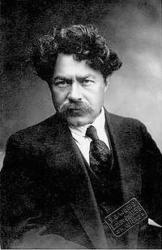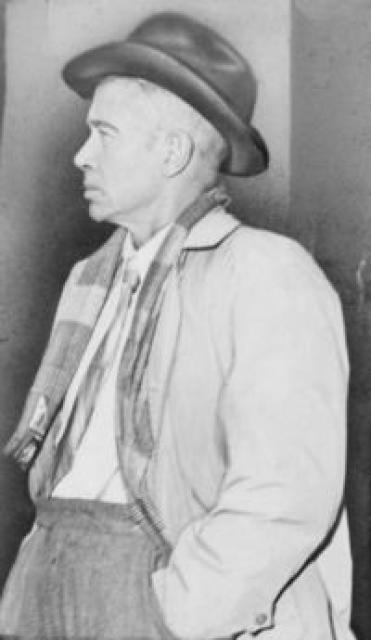
Edward Kammings
 USA
USA- Biography of Edward Estlin Cummings
- Radical Experimentation in Poetry
- A Multifaceted Artist
- Influence and Controversy
- Paris Years and Artistic Exploration
- l(a one iness
- Legacy as an Artist
Biography of Edward Estlin Cummings
Edward Estlin Cummings, also known as E.E. Cummings, was an American poet, writer, artist, and playwright. He was born on October 14, 1894, in Cambridge, Massachusetts, and passed away on September 3, 1962, in North Conway, New Hampshire.
Radical Experimentation in Poetry
Cummings is known for his radical experimentation with form, punctuation, syntax, and spelling in his poetic work. In some of his poems, capital letters are not used, and lines, phrases, and even individual words are often broken in unexpected places. Punctuation marks are either absent or placed in a peculiar manner. Additionally, Cummings frequently disrupted the conventional word order of the English language in his sentences. Many of his works can only be understood when read from the page, rather than aloud. Despite his tendency for formal experimentation, a substantial portion of Cummings' poetry retains a traditional character, including a significant number of sonnets. In his later years, he faced criticism for his self-repetition and adherence to a well-established style. However, his simple language, sense of humor, and exploration of themes such as sex and war earned him immense popularity, particularly among the youth. By the time of his death in 1962, Cummings was the second most popular English-language poet after Robert Frost.
A Multifaceted Artist
Throughout his lifetime, Cummings published over 900 poems, two novels, several plays, and essays. He was also an accomplished artist, creating numerous drawings, sketches, and paintings. From 1911 to 1916, Cummings studied at Harvard University, where he earned his Bachelor of Arts (B.A.) degree in 1915 and his Master of Arts (M.A.) degree in 1916. Starting in 1912, Cummings' poems were regularly published in the university newspaper Harvard Monthly and, from 1915, in the publication Harvard Advocate.
Influence and Controversy
In 1914, Cummings was strongly influenced by avant-garde authors such as Gertrude Stein and Ezra Pound. In 1915, he graduated from college with honors and delivered a controversial speech titled "The New Art" during the graduation ceremony. In his speech, Cummings referred to the work of the well-known avant-garde poet Amy Lowell as "abnormal," although he intended to "sing her praise." This speech brought him negative attention, and he faced criticism in newspapers. In 1917, several of Cummings' poems were published in the compilation "Eight Harvard Poets." That same year, Cummings volunteered in France and served in the medical corps. Due to administrative confusion, he was not assigned to any medical units for five weeks and spent that time in Paris. Cummings developed a love for the city, which he regularly visited throughout his life.
On September 21, 1917, just five months after arriving in France, Cummings was arrested on suspicion of espionage after openly expressing his pacifist views. He was sent to the Dépôt de Triage concentration camp in Normandy, where he spent three and a half months. Memories of these events became the basis for his novel "The Enormous Room." Cummings was released on December 19, 1917, after his father's intervention, as he had extensive political connections. He immediately returned to the United States. In 1918, the poet was drafted into the army and served until November 1918.
Paris Years and Artistic Exploration
From 1921 to 1923, Cummings lived in Paris. During the 1920s and 1930s, he extensively traveled in Europe and visited the Soviet Union in 1931, where he was struck by the absence of intellectual and artistic freedom. He expressed his impressions in the book "Eimi." In the early years of his career, Cummings was strongly influenced by avant-garde writers and poets such as Gertrude Stein, Ezra Pound, Amy Lowell, and others. During his visits to Paris, he discovered Dadaism and surrealism, which also influenced his work.
Despite his fascination with modernist poetry, Cummings wrote many poems that resemble classical sonnets in form. Some of his works are known for their use of unconventional typography. In these poems, words, fragments of words, brackets, and other punctuation marks are scattered throughout the page. Being engaged in painting, Cummings understood that the visual presentation of a poem greatly influenced the reader's experience. He used typography to "paint pictures" in some of his works.
Cummings' first poetry collection, "Tulips and Chimneys" (1923), introduced the public to his signature style characterized by intentionally distorted grammar and punctuation, as seen in the poem "a leaf falls loneliness":
l(a one iness
Some of Cummings' most famous poems do not feature unconventional typography but still bear the imprint of his unique style. He often arbitrarily altered the established word order in English sentences, resulting in renowned lines such as "why must itself up every of a park..." or "they sowed their isn't." In some poems, Cummings deliberately distorted the spelling of English words. Additionally, he creatively used compound words, such as "mud-luscious."
Many of Cummings' poems have a sharp social tone, satirizing the flaws of societal structure. However, the poet was not devoid of romanticism, often celebrating love, friendship, and other forms of human relationships.
Legacy as an Artist
Cummings was often criticized for halting his creative development after establishing his unique style. Nevertheless, critics note that, despite the technical stagnation, the content of Cummings' poetry became increasingly significant over time.
Cummings considered himself as much an artist as a poet and writer—especially in his later years spent in New Hampshire, where he engaged in painting during the day and wrote poetry at night.
During the 1920s and beyond, Cummings consistently identified himself as a follower of cubism, Dadaism, and surrealism. He particularly admired the works of Pablo Picasso.
Cummings initially gained recognition as an artist through his drawings and caricatures, which were published in the literary magazine Dial in the 1920s. Later, he became known as a painter. In 1931, Cummings published a collection of works created with charcoal, ink, oil, pastel, and watercolor.