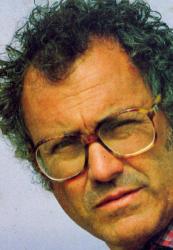
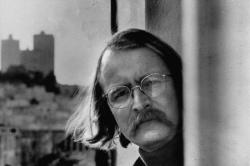
Yohan Runeberg
 Finland
- Johan Ludvig Runeberg: A Finnish Poet of National-Romantic Content
- Early Life and Education
- Affinity for the Finnish Peasantry
- Literary Career and Personal Life
- Notable Works and Legacy
Johan Ludvig Runeberg: A Finnish Poet of National-Romantic Content
Johan Ludwig Runeberg, born on February 5, 1804, in Jakobstad, Finland, was a Finnish poet who wrote poems of national-romantic content in the Swedish language. He is best known for his collection of poems called "The Tales of Ensign Stål" (Fänrik Ståhls sägner), with one of the poems from this collection, "Our Land" (Vårt land/Maamme), becoming the national anthem of Finland.
Early Life and Education
Johan Ludwig Runeberg was born into a large family to sea captain Lorenz Ulrik Runeberg and Anna Maria Malm in the city of Jakobstad on the western coast of Finland in Ostrobothnia. He received his education first in Oulu, then in Vaasa, and later attended Åbo University (now Turku). It was at the university where he encountered and became friends with J.H. Snellman and Z. Topelius, both of whom played important roles in the Finnish national revival. During this time, Runeberg also became acquainted with the works of Bellman and started to engage in publicistic writing.
Affinity for the Finnish Peasantry
To improve his financial situation, Runeberg took up teaching in central Finland, which allowed him to closely experience the life of ordinary people. This encounter left a profound impression on him and formed his idealized view of the Finnish peasantry, as reflected in his famous poem "The Peasant Paavo" (Bonden Paavo). The protagonist of this poem constantly loses his harvest due to frost, but without complaint, he makes bread from the ground bark. This image became a true symbol of the quality known as "sisu," the readiness to endure any hardships.
Literary Career and Personal Life
In 1827, Runeberg obtained his master's degree and remained at the university, which had relocated to Helsinki after the fire in Turku. From 1830, he taught rhetoric at the university, and the same year, his first collection of poems, "Poems" (Dikter), was published. In 1831, Runeberg married Fredrika Charlotta Tengström, and they had eight children together. Their son, Walter Runeberg, became a sculptor and created a monument to his father, which was erected in 1885. Runeberg's wife, Charlotta, gained fame as a writer, specializing in historical novels in the style of Walter Scott.
In 1833, Runeberg published his second collection of poems. In 1837, he moved to Porvoo, where he obtained a teaching position in classical languages at the local gymnasium and established a newspaper called Borgå Tidning. In 1847, he became the director of the gymnasium.
Notable Works and Legacy
Among Runeberg's most famous works are the hexameter poem "The Elk Hunters" (Elgskyttarne), "King Fjalar" (Kung Fjalar), and the cycle of poems "The Tales of Ensign Stål," which depicts the struggle of the Swedish army against the Russians in the 1808-1809 war. The "Tales" gained the most recognition and, along with Lönnrot's "Kalevala," are considered part of the Finnish national epic. In 1848, German immigrant Fredrik Pacius composed the prologue to the "Tales" - the poem "Our Land" (Vårt land) - which is now the national anthem of Finland (with the Finnish translation attributed to Paavo Cajander).
On February 5, Runeberg's birthday, Finland celebrates Runeberg Day to honor his contributions to Finnish literature and national identity.