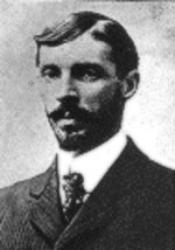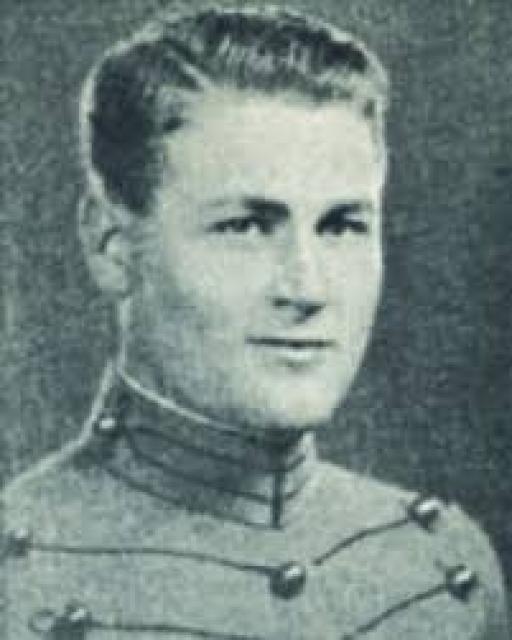
Edward Murphy
 USA
USABiography of Edward Murphy
Edward Murphy, an American aerospace engineer, was a specialist in critical safety systems. He is best known as the author of the legendary "Murphy's Law," which states that "anything that can go wrong will go wrong."

Early Life and Education
Edward Murphy was born in the Panama Canal Zone and was the eldest of five children. He completed his schooling in New Jersey and went on to attend the United States Military Academy at West Point. He graduated from the Academy in 1940 and joined the United States Army in the same year.
World War II and Career
In 1941, Murphy underwent pilot training and joined the United States Army Air Forces. During World War II, he served in the Pacific Theatre, specifically in India, China, and Burma. He rose to the rank of major before the end of the war.
After the war, Murphy enrolled in the United States Air Force Institute of Technology and later became an officer at the Wright Air Development Center at Wright-Patterson Air Force Base. It was during his time at the center that Murphy worked on an experiment involving high-speed rocket sleds, which led to the formulation of the famous "Murphy's Law." The exact circumstances surrounding the discovery of the law remain uncertain, with various conflicting versions. Some even argue that Murphy himself had no connection to the law, as similar expressions existed in different cultures. However, the common thread among the different versions is that Murphy was trying to address complaints about the incorrect functioning of a potentially fail-safe device, only to find out that it had been installed in the only possible incorrect way.
Murphy originally intended his law to highlight the fact that humans are more likely to make mistakes, rather than attributing malice to inanimate objects. He believed that this principle was crucial in the design of reliable systems, particularly in defense projects.
Later Career and Legacy
In 1952, Murphy left the Air Force and continued studying rocket acceleration methods at Holloman Air Force Base. He then returned to California and started designing aircraft cabins for private clients. His work included developing ejection systems for several well-known aircraft, such as the "F-4 Phantom II," "XB-70 Valkyrie," "SR-71 Blackbird," "B-1 Lancer," and "X-15."
During the 1960s, Murphy focused on developing safety and life support systems for the "Apollo" project. One of his final projects was designing the operational system and protective pilot adaptations for the "Apache" helicopter.
Edward Murphy passed away on July 17, 1990, at the age of 72. His legacy lives on through "Murphy's Law" and his contributions to aerospace engineering and safety systems.