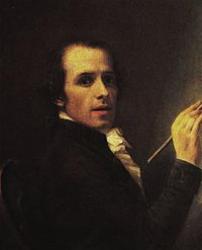
Edward Onslow Ford
 Great Britain
- Edward Onslow Ford: Master Sculptor of the New Sculpture Movement
- Education and Early Influences
- Royal Exhibitions and the New Sculpture Movement
- Portraiture and Allegorical Sculpture
- Association with the Pre-Raphaelites and Arts and Crafts Movement
- Personal Life and Legacy
Edward Onslow Ford: Master Sculptor of the New Sculpture Movement
Edward Onslow Ford, a prominent English sculptor, was born on July 27, 1852, in Islington, London.
Education and Early Influences
Ford's artistic journey began in 1870-1872 when he traveled to Europe, studying painting in Antwerp and sculpture in Munich under Professor Wagmüller. In 1874, upon his return to London, he was inspired by the work of Alfred Gilbert and resolved to pursue a career in sculpture.
Royal Exhibitions and the New Sculpture Movement
From 1875, Ford actively exhibited his works at the Royal Academy and, from 1879, at the Grosvenor Gallery. In the 1880s, he became a leading figure in the "New Sculpture" movement, which blended highly detailed naturalism with symbolic imagery derived from mythology and poetry. The works were often cast in bronze.
Portraiture and Allegorical Sculpture
Ford's oeuvre can be categorized into two main areas: portraiture and symbolic-allegorical sculptures. His portraits exhibit a robust realism with lively modeling. His busts of Millais and Alma-Tadema showcase intricate drapery and a sense of spontaneity. In contrast, his allegorical sculptures are meticulously balanced and refined, approaching the realm of symbolism with works such as "Madness" (1886), "Peace" (1887), and "An Egyptian Singer" (1889).
Association with the Pre-Raphaelites and Arts and Crafts Movement
Ford maintained close ties with the Pre-Raphaelites, particularly the second wave. He actively participated in the Arts and Crafts Society founded by Walter Crane, exhibiting his works at its exhibitions.
Personal Life and Legacy
Ford married Baroness Gwendoline von Kreusser during his studies in Munich. He passed away in London on December 23, 1901, leaving behind an enduring artistic legacy that continues to be admired for its technical mastery and evocative symbolism.