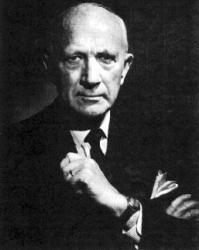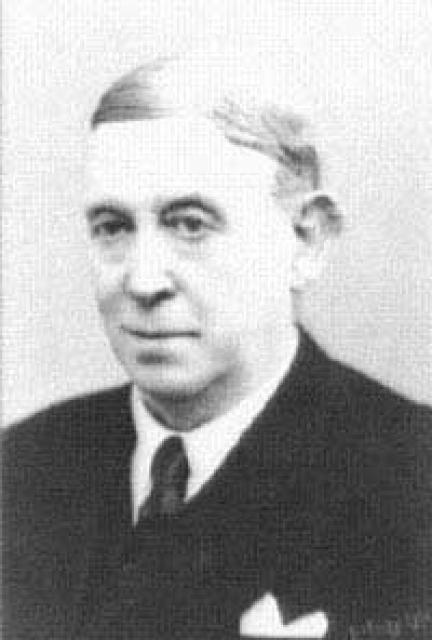
Egas Moniz
 Portugal
Biography of Egas Moniz
Egas Moniz was a Portuguese neuropathologist, neurosurgeon, and public figure. He enrolled at the University of Coimbra in 1881, initially considering a career in engineering but later transferring to the medical faculty. In 1899, he graduated with a medical degree. Moniz specialized in neurology and traveled to Paris, where he trained under the best neurology and psychiatry specialists. In 1902, he became a professor at the University of Coimbra and in 1911, he was appointed as the head of the neurology department at the newly formed University of Lisbon.
Although Moniz was still young, he was involved in politics. From 1903 to 1917, he was elected as a parliament member several times and served as Portugal's ambassador to Spain from 1917 to 1918. He later became the Minister of Foreign Affairs and led Portugal's delegation in the signing of the Treaty of Versailles. After a conflict that ended in a duel, Moniz withdrew from politics in 1919.
Contributions
Moniz's early scientific research focused on the use of X-rays in neurology. During that time, the method of investigating brain blood vessels involved the introduction of air, developed by the American scientist Walter Dandy. Moniz sought a lighter and less traumatic approach. After several years of experimentation, in 1927, he demonstrated the method of cerebral angiography, a radiographic examination of brain blood vessels achieved by injecting a contrast medium (iodine) that made them distinguishable from surrounding tissues.
However, Moniz's worldwide fame and Nobel Prize were not a result of his discovery of angiography but rather his work on a new method for treating neurological disorders. This method, known as prefrontal leukotomy, involved cutting the white matter of the frontal brain and was often referred to as lobotomy. In 1935, Moniz and his assistant Almeida Lima performed the first prefrontal lobotomy on a woman who had been institutionalized in a penitentiary psychiatric hospital for many years.
Moniz and Lima continued to perform surgeries, and out of the 20 patients who underwent lobotomy, 13 suffering from depressive-manic syndrome showed significant improvement. However, out of the 7 patients diagnosed with schizophrenia, only two experienced improvement, with the remaining patients becoming more apathetic than expected. Although Moniz's method had its limitations, it was relatively simple to implement. His first report caught the attention of Walter Freeman, the head of the neurology department at George Washington University, and James Watts, the head of the surgery department at the same university. From 1948 to 1957, Freeman alone performed over 2,400 lobotomies. This radical procedure allowed individuals suffering from depression, obsessive thoughts, and persecutory delusions to regain an acceptable level of mental well-being.
Nobel Prize and Legacy
In 1949, Egas Moniz was awarded the Nobel Prize in Physiology or Medicine "for the discovery of the therapeutic value of leukotomy in certain psychoses." He received honorary degrees from the University of Bordeaux and the University of Lyon and was a member of the Paris Academy of Medicine, the Madrid Academy of Medicine, the Honorary Society of British Neurological Surgeons, the Honorary Royal Medical Society, the National Academy of Medicine in Rio de Janeiro, and the American Neurological Association.
Some of his major works include "Physiological and pathological aspects of sex life" (Coimbra, 1901), "Cerebral angiography, its applications and results in anatomy, physiology, and clinic" (Paris, 1934), and "Prefrontal leucotomy. Surgical treatment of certain psychoses" (Turin, 1937).