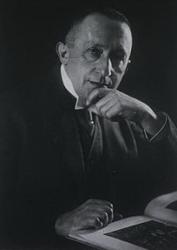
Wilder Graves Penfield
 USA
USA- Biography of Wilder Graves Penfield
- Early Life and Education
- Career and Contributions
- Contributions to Neuroscience
Biography of Wilder Graves Penfield
Wilder Graves Penfield was an American neurologist and neurosurgeon who had a particular interest in epilepsy. He gained a deep understanding of brain functions through intensive interaction with people who suffered from this condition. This approach was influenced by Charles Scott Sherrington and John Hughlings Jackson, who viewed epilepsy as an opportunity to uncover the "functional organization of the brain."
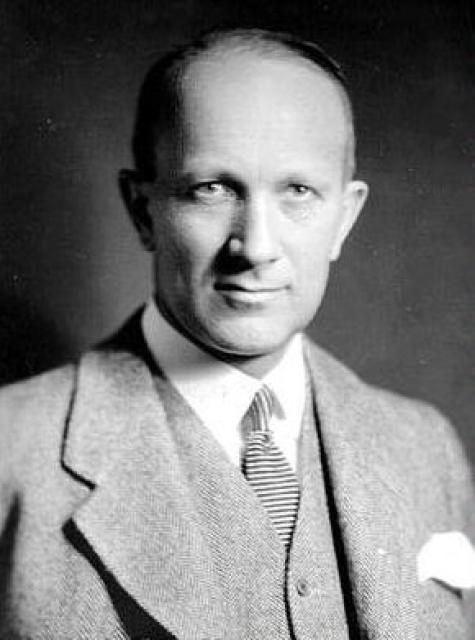
Early Life and Education
Wilder Graves Penfield was born on January 26, 1891, in Spokane, Washington. He was one of three children of physician Charles Samuel and Genevieve (Jefferson) Penfield. Wilder was left fatherless at a young age, and his mother had to become a writer and a teacher of biblical studies to support the family. He spent his early years studying at the Galahad School in Wisconsin, where his mother worked as an economist. In 1909, he graduated with a high school diploma and was admitted to Princeton University. He actively participated in student activities and served as the class president. Penfield excelled in football, and after graduating in 1913, he became a football coach. Despite having a degree in literature, Wilder continued his education at Oxford University with a Rhodes scholarship and a Beit Memorial scholarship. Here, he learned about medicine from Sir William Osler and Sir Charles Scott Sherrington.

Career and Contributions
In 1917, Wilder married Helen Catherine Kermott, with whom he raised four children. He received his medical degree from Johns Hopkins University in Baltimore in 1918. From 1919 to 1921, Penfield worked in Sherrington's research laboratory at Oxford University. He returned to the United States in 1918 to train in general surgery and neurosurgery in New York City. In 1924, he founded the Laboratory of Neurocytology at Columbia-Presbyterian Hospital, where he worked as an assistant attending surgeon from 1921 to 1928.
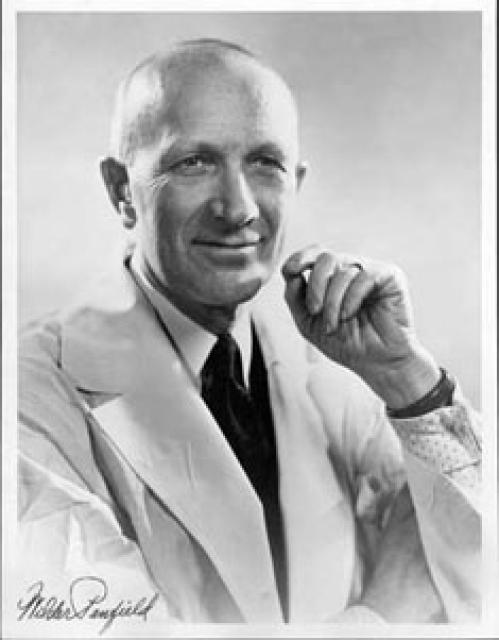
In 1928, Penfield became a neurosurgeon at the Royal Victoria Hospital and the Montreal General Hospital. At the Montreal General Hospital, he refined his surgical procedure for treating severe epilepsy. He studied, improved, and adapted many methods used in this operation through his trips to Europe. One of the successful surgeries in 1931 prompted him to write a textbook on neurosurgery. However, instead of writing it alone, Penfield invited other specialists to contribute to the book. The result was a three-volume textbook on neurology titled "Cytology and Cellular Pathology of the Nervous System" published in 1932. The collaborative approach to writing the book led Penfield to establish the Montreal Neurological Institute, where he served as its first director from 1934 to 1960. He also held positions as a professor of neurology and neurosurgery at McGill University from 1933 to 1954.
Penfield became a naturalized Canadian citizen in 1934 and served as a colonel in the Royal Canadian Medical Corps from 1945 to 1946. He led various projects, including the study of motion sickness, caisson disease, and methods of air transportation for people with head injuries. His wartime experience led him to write two books: "Manual of Military Neurosurgery" and "Epilepsy and Cerebral Localization," both published in 1941.
After the war, Penfield continued his study of epilepsy, focusing on cases of birth injuries to the brain. He was a member of the Royal Society of London and the Royal Society of Canada. Penfield helped establish the Vanier Family Institute, which aimed to improve the well-being of Canadian families, and served as its first president from 1965 to 1968. In 1960, due to his age, Penfield retired from the Montreal Neurological Institute and embarked on what he called his "second career" as a writer and lecturer. He believed that peace and tranquility were not what the brain needed in old age, stating, "Rest is not what the brain needs. Rest destroys the brain." During his retirement, Penfield traveled abroad multiple times and even lectured in China and Russia.
Contributions to Neuroscience
Together with electrophysiologist Herbert Jasper, Penfield developed a technique for electrically stimulating different areas of the brain during open surgery. Patients remained conscious, allowing Penfield to record and analyze their sensations. The treatment involved the destruction of specific areas of the brain's cortex that served as the focus of seizure activity. This method of treating focal epilepsy by removing affected brain regions yielded impressive results and became a standard procedure in neurosurgery.
Penfield's monograph, "The Cerebral Cortex of Man," published in 1950, summarized the mapping of major motor and sensory areas of the cerebral cortex, including the delineation of a new "supplementary motor area" and "secondary sensory area." His observations on temporal lobe epilepsy are described in his book "Epilepsy and the Functional Anatomy of the Human Brain" published in 1954. Penfield also identified four regions of the brain's cortex responsible for human speech functions, which he described in his work "Speech and Brain Mechanisms."
In his final work, an autobiographical book titled "No Man Alone: A Surgeon's Story," Penfield completed just three weeks before his death from abdominal cancer at the Royal Victoria Hospital in Montreal on April 5, 1976. The book was published posthumously in 1977 as a tribute to a man whom friends and colleagues remembered as someone who always viewed his discoveries as "exciting beginnings."