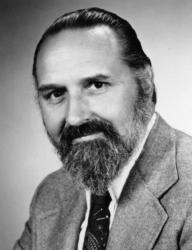
Egbert Wolf
 Germany
- A Brilliant Botanist: The Life and Legacy of Egbert Wolf
- Career in Horticulture and Botany
- Arrival in Russia and Contributions
- Scientific Achievements
- International Recognition and Legacy
A Brilliant Botanist: The Life and Legacy of Egbert Wolf
Early Life and EducationEgbert Wolf was born on September 5, 1860, in a working-class family in Berlin. He received his secondary education at the Royal Grammar School in Berlin from 1871 to 1876. Subsequently, he pursued horticulture at the School of Horticulture associated with the Royal Berlin Botanical Garden. Concurrently, Wolf attended lectures on botany and dendrology given by esteemed professors Alexander Braun and Karl Koch at the University of Berlin. In 1879, he successfully completed his theoretical and practical training, earning the title of scientific gardener.
Career in Horticulture and Botany
Wolf's educational journey continued at the Royal Pomological Institute in Proskau. However, due to financial constraints, he discontinued his studies prematurely in 1880. Despite this setback, Wolf remained committed to his passion for science, engaging in self-education while working odd jobs. He traveled extensively, studying mountain vegetation in the Alps and Carpathians, as well as the flora of Hungarian steppes. For a period, Wolf worked at the Royal Berlin Botanical Garden, processing his collected materials.
Arrival in Russia and Contributions
In 1882, at the invitation of Eduard Ludwig Regel, director of the Imperial Botanical Garden in St. Petersburg, Wolf embarked on a journey to Russia. He joined the garden on February 15th as head gardener of the Novo-Gollandskoye Glasshouse Department. Two years later, Wolf became the chief gardener at the Botanical Cabinet of the Imperial Military Medical Academy, where he managed greenhouses and a botanical garden.
Wolf's most significant contributions began in 1886 when he was appointed as the chief gardener at the Forest Institute. His work there spanned several decades and cemented his reputation as a renowned botanist, dendrologist, systematist, and introducer of plant species. In 1893, he assumed the additional role of assistant in dendrology and forestry, instructing students in practical classes.
Scientific Achievements
Wolf's expertise in systematics and plant introduction led to the acclimatization and testing of numerous new plants from around the world in the Forest Institute's nurseries and dendrological garden. He painstakingly described many of these species and developed a novel scale to assess their winter hardiness. His work transformed the dendrological garden, which he expanded significantly from its modest beginnings. Notably, Wolf also redesigned the flower garden in front of the main Forest Institute building.
International Recognition and Legacy
Wolf's contributions were widely recognized and honored. He became a member of various prestigious botanical societies, including the Russian Botanical Society, the Imperial Horticultural Society, and the German, French, Austro-Hungarian, and Russian dendrological societies. He was also a corresponding member of the Austro-Hungarian dendrological society.
Egbert Wolf's legacy as a brilliant botanist, dendrologist, and introducer of plant species continues to inspire researchers and plant enthusiasts alike. His contributions to the establishment of parks, botanical gardens, and resorts in St. Petersburg, Minsk, and Pyatigorsk remain a testament to his dedication to the advancement of botanical knowledge and the beautification of natural environments.