Eikoh Hosoe
 Japan
Japan- Biography of Eikoh Hosoe
- Early Career and Style
- First Exhibition and Collaboration with Yukio Mishima
- The 'Kamaitachi' Project and International Recognition
- Legacy and Museum Career
Biography of Eikoh Hosoe
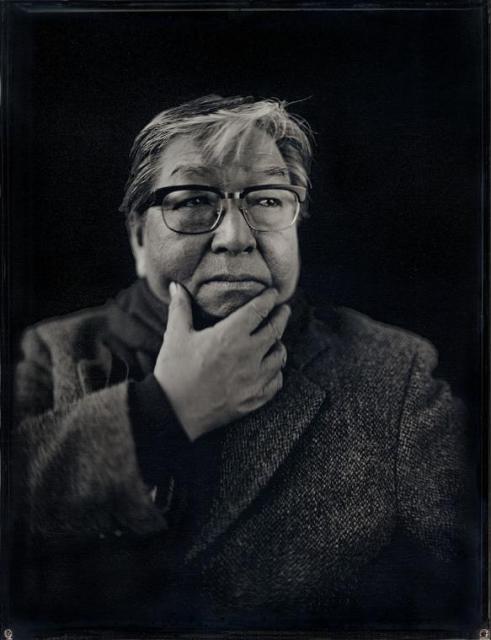
Eikoh Hosoe, a Japanese photographer, was born in 1933 in the city of Yonezawa, Yamagata prefecture. In the early 1950s, he was already studying at the Tokyo College of Photography during a challenging period for many progressive Japanese individuals. It was during this time that Hosoe changed his birth name (Toshihiro) to 'Eikoh' as a symbol of a new era in his country's history, which was beginning to embrace Western culture.
Early Career and Style
Hosoe began taking photographs in school and even won a couple of youth competitions. He initially worked in a documentary style and later started experimenting with staged, highly emotional photographs. Throughout his career, Hosoe primarily worked with black and white images, only occasionally delving into color photography. In the 1950s, Hosoe published a photography manual, and the royalties from this allowed him to embark on a significant journey across the country, capturing numerous photographs of post-atomic Japan.

First Exhibition and Collaboration with Yukio Mishima
Hosoe's first solo exhibition took place in 1956, and although it was not a success overall, it attracted some attention to his work. A significant turning point in his creative life was his encounter with the writer Yukio Mishima, leading to a long collaboration. During this period, Hosoe's work became imbued with homoeroticism, sometimes shocking the conservative Japanese audience. One of his most famous series from those years was the 'Rose Form' series, primarily focusing on the beauty of the male body. Many of his photographs were bold and provocative. His main model at the time was Tatsumi Hijikata, and Hosoe even curated exhibitions featuring Hijikata's photographs. Later, Tatsumi and Eikoh collaborated on documentary films, and Hosoe himself became a well-known documentary film director.
The 'Kamaitachi' Project and International Recognition
In 1969, Hosoe presented the album 'Kamaitachi' to the public, once again collaborating with dancer Tatsumi Hijikata. The project, set in the Japanese countryside, is considered Hosoe's most powerful and innovative work. In addition to original storytelling, Hosoe employed avant-garde techniques. Initially released in a limited edition of 1000 copies, 'Kamaitachi' eventually gained international acclaim and was reissued.
Legacy and Museum Career
Hosoe not only pursued his own artistic endeavors but also served as the director of the Museum of Photographic Arts in Kiyosato, Yamanashi prefecture, Japan. He held this position from the museum's opening in 1995.