Eizens Laube
 USA
USABiography of Eižen Laube
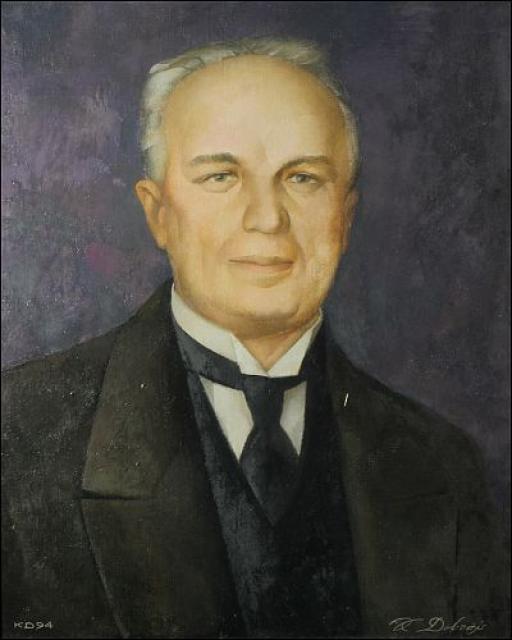
Early Life and EducationEižen Laube was a prominent Latvian architect and one of the brightest representatives of national romanticism. He was born in Riga, into a family of a master potter who had relocated from Smiltene and engaged in small-scale trade. His mother's stepfather was a construction contractor with extensive practice, which exposed Laube to construction and architectural drawings from an early age. His artistic talent developed and strengthened during his student years. After attending the Peter I Riga Real School, he enrolled in the Architecture Department of the Riga Polytechnic Institute, which he graduated from in 1906. During his student years, he visited Finland in 1904, where he acquainted himself with the local architecture and established personal connections with Finnish architects. To enhance his qualifications, he traveled extensively throughout Europe, visiting Sweden, Denmark, Germany in 1909, and Germany and France in 1910. Subsequently, he established his independent practice while working as a lecturer at various institutions, including the Riga Polytechnic Institute, Baltic Technical High School (1907-1919), and the University of Latvia (1919-1944).

Architectural Career
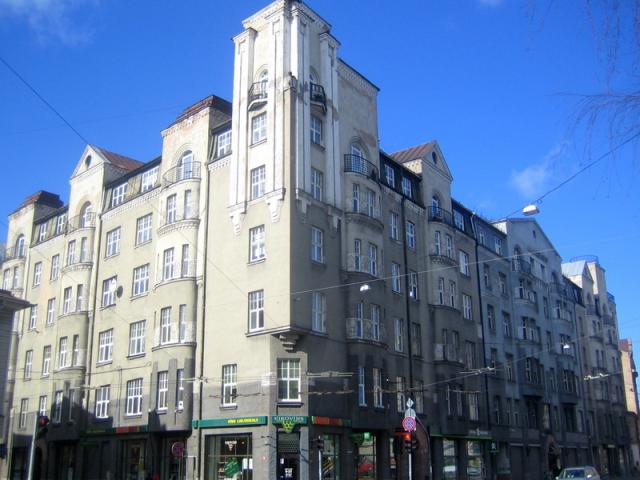
Laube's architectural and design bureau, located in a building designed by himself at 70a Lāčplēša Street, was responsible for 83 multi-story residential and public buildings in Riga, as well as numerous other structures, totaling around two hundred. He also published several dozen scientific works on architectural styles and other related topics. He actively participated in various commissions and public organizations, serving as the unwavering leader of the architectural commission of the National Building Committee since its establishment in 1936. Laube was the creator of the first specialized journal in Latvian, "Latvijas Architektūra" (Latvian Architecture), which was published from 1938 to 1940. He was honored as a correspondent member of the British Royal Institute of Architects in 1937 and received various accolades, including being awarded the Order of the Three Stars of the III (1929) and IV (1926) degrees, the Order of the Cross of Recognition of the II degree in 1938, and the Knight of the Swedish Order of Vasa. In 1940, he became a laureate of the National Prize (Tēvzemes balva).
Later Years and Legacy
Known for his meticulous attention to decorative finishes, Laube utilized natural materials such as wood and carved stone, incorporating the entire ornamental palette popular in the symbolism of Art Nouveau in his facade designs. Thanks to Laube, the center of Riga acquired its distinctive and recognizable appearance. During the time of the Latvian Republic, he became virtually the government architect and a favorite of Kārlis Ulmanis. While maintaining his professional excellence, his works began to carry a certain official tone. He redesigned the assembly hall of the University of Latvia, constructed the Tower of the Three Stars in the Presidential Palace, and created the interior of the Red Hall based on his sketches. In 1944, Laube emigrated to Germany and resided in Berlin before moving to Pinneberg near Hamburg in 1947, where he became the dean of the Faculty of Architecture at the Baltic University. He subsequently moved to the United States in 1950, upon the invitation of his son, and worked at an architectural bureau in Olympia, Washington until 1955. His new place of residence became Portland, Oregon, where he wrote his seminal book, "The Manifestation of Architecture," which summarized his many years of creative work.


