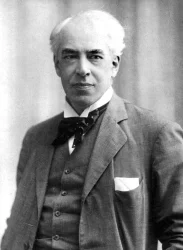
Eli Whitney
Eli Whitney was an American inventor and manufacturer whose work became closely associated with two major changes in the nation’s economy: the cotton gin and the development of machine-based firearms production. The cotton gin greatly increased the speed of cleaning short-staple cotton, but it also helped make plantation slavery more profitable and entrenched. Whitney’s later efforts to standardize musket parts contributed to new methods of manufacturing.
Early life and invention
Whitney was born in Westborough, Massachusetts, on 8 December 1765. Mechanically inclined from a young age, he worked to pay for his education and entered Yale College, graduating in 1792. He traveled south intending to take a teaching position, and while in Georgia learned about the difficulty of removing seeds from short-staple cotton.
With financial support from Catherine Greene and Phineas Miller, he developed a machine that used teeth and a screen to separate seeds from the fiber. He received a patent in 1794. The device, known as the cotton gin, dramatically accelerated cotton processing. Whitney and Miller attempted to license and manufacture it, but the design was widely copied and the partners struggled to enforce their patent. Whitney earned little from an invention that transformed the southern economy.
That transformation had a grave human cost. By making cotton more profitable, the gin helped expand plantation agriculture and increased demand for enslaved labor. The machine reduced the work of separating seeds from fiber; it did not reduce the labor required to grow and pick cotton. Its history illustrates how technological change can create wealth while deepening exploitation.
Arms manufacturing
In 1798 Whitney won a federal contract to produce muskets for the United States government. He established an armory in New Haven and worked to manufacture weapons through repeatable processes. Whitney promoted the use of standardized components that could be assembled and replaced more readily, though historians debate how fully interchangeable parts were achieved at his factory and how much credit he deserves for originating the system.
The contract proved difficult: deliveries took years longer than promised, and Whitney faced financial and technical challenges. Still, his experiments in machine tools and organized production helped shape later American manufacturing.
Legacy
Whitney died in New Haven on 8 January 1825. He is remembered as a significant inventor and industrial pioneer, but his legacy is inseparable from the cotton gin’s role in strengthening slavery. His story captures both the productive possibilities of mechanical innovation and its power to reinforce unjust systems.