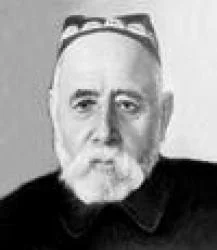
Eliezer Ben-Yehuda
- Early years and a new idea
- Journalism and language building
- Conflict and persistence
- A dictionary and a lasting legacy
Eliezer Ben-Yehuda became the best-known champion of bringing Hebrew back into everyday speech. When he settled in Jerusalem in the late nineteenth century, Hebrew was widely used in prayer, study, and writing, but Jewish communities generally spoke other languages in daily life. He believed a shared spoken language could help unite a modern Jewish national community, and he devoted his career to making that vision practical through journalism, teaching, and lexicography.
Early years and a new idea
Born Eliezer Yitzhak Perlman on January 7, 1858, he grew up in Luzhki, then part of the Russian Empire’s Vilna Governorate and now in Belarus. He received a traditional Jewish education and developed a deep command of Hebrew and related texts. As a young man, he encountered nationalist ideas then spreading across Europe and began to connect Jewish national revival with the renewal of Hebrew as a living language.
He adopted the pen name Eliezer Ben-Yehuda and wrote in support of a Jewish national center in the historic homeland. In 1881, he and his first wife, Devora Jonas, emigrated to Ottoman Palestine and settled in Jerusalem. There, he made Hebrew the language of family life, speaking it with Devora and, later, raising their son Ben-Zion in it. That household became a vivid demonstration of what he hoped Hebrew could become.
Journalism and language building
Ben-Yehuda understood that a language of everyday life needed more than devotion to ancient texts. It needed words for modern objects and ideas, a flexible style for journalism and education, and institutions that could guide usage. He wrote for Hebrew newspapers, taught in Jerusalem, and in 1884 founded the weekly Ha-Tsevi, which carried news and public debate in a more contemporary form of Hebrew.
He also coined and promoted new vocabulary. The word milon, for a dictionary, became one well-known example of the effort to make Hebrew serve ordinary modern needs. Many words associated with the language’s renewal emerged through collective discussion and use, rather than from one person alone. Ben-Yehuda’s role was to push that process forward publicly and systematically.
In 1890, he and fellow educators and writers established the Committee of the Hebrew Language, an organization that worked to develop and standardize modern usage. It was a forerunner of the Academy of the Hebrew Language, founded in 1953. Through the press, schools, public meetings, and his own household, Ben-Yehuda helped create a growing network of speakers who could carry Hebrew into new settings.
Conflict and persistence
His campaigns brought him into conflict with parts of Jerusalem’s Jewish community, including religious opponents who objected to using a sacred language for mundane conversation and disagreed with his political and social views. His uncompromising journalism also drew attention from Ottoman authorities. In 1893, he was arrested after an article in Ha-Tsevi was interpreted as incitement against the government; the paper was shut down for a time. He was later released and continued his work.
His personal life also involved hardship. Devora died in 1891, leaving five young children. He later married her sister Paula, who took the Hebrew name Hemda. Hemda became a journalist and writer in her own right and supported the family’s work, including the long dictionary project.
A dictionary and a lasting legacy
Ben-Yehuda’s most ambitious undertaking was a comprehensive dictionary drawing on Hebrew from ancient and modern periods. The first volumes appeared during his lifetime, but he died in Jerusalem on December 16, 1922, before the work was complete. Hemda and their son Itamar helped see the project through; its seventeen volumes were published over several decades.
Ben-Yehuda did not revive Hebrew alone. Teachers, writers, students, families, and language activists all helped turn it into a shared vernacular. His enduring contribution was to make that goal concrete: he modeled it at home, argued for it in print, created institutions to support it, and worked to give speakers the vocabulary they needed. The result was a language able to connect ancient texts with the demands of modern life.