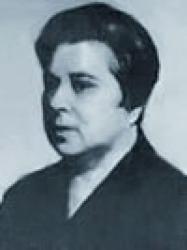
Elizabeth Anderson
 Great Britain
- Elizabeth Garrett Anderson: The First Female Doctor in England
- Overcoming Obstacles in Pursuit of Education
- Challenges to Qualify as a Doctor
- Pioneering Work in Women's Healthcare
- Contributions to Women's Education and Medicine
- Recognition and Achievements
- Legacy and Family
Elizabeth Garrett Anderson: The First Female Doctor in England
Elizabeth Garrett Anderson was born in Oldbury, Suffolk in 1836, the second of eleven children of Newton Garrett. She received her education at home and in a private school. In 1860, she decided to pursue a career in medicine, which was considered unconventional and almost scandalous for a woman at that time.
Overcoming Obstacles in Pursuit of Education
Despite facing numerous obstacles, Elizabeth managed to obtain a rudimentary medical education at Middlesex Hospital in London. However, she was denied admission as a full-time student in several medical schools she applied to. Nevertheless, she was able to study anatomy at a private London hospital, with some professors from St. Andrews University and in a correspondence medical school in Edinburgh.
Challenges to Qualify as a Doctor
Elizabeth also faced difficulties in obtaining a qualifying diploma that would allow her to practice medicine. The University of London, Royal College of Physicians and Surgeons, and many other institutions refused to admit her to their examinations. However, the Pharmaceutical Society of London eventually allowed her to enter the "Licensed Pharmacist Circle," where she gained a position in 1865.
Pioneering Work in Women's Healthcare
In 1866, Elizabeth was appointed as a general practitioner at the St. Mary Dispensary, a London institution established to provide medical assistance to underprivileged women by qualified female specialists. The dispensary soon expanded into the New Hospital for Women, where she worked for over twenty years. In 1870, she obtained a Doctor of Medicine degree in Paris.
Contributions to Women's Education and Medicine
Elizabeth was actively involved in the development of the New Hospital and, from 1874, the establishment of a full medical school for women in London. Both institutions underwent significant improvements and were equipped with modern facilities. The New Hospital, located on Easton Road, employed an all-female medical staff, and the associated school on Hunter Street educated over 200 students, most of whom aspired to study at the newly opened medical faculty of the University of London in 1877.
Recognition and Achievements
Despite facing opposition, including the requirement for hospitals to have at least 150 beds to be eligible for student training, Elizabeth's efforts, alongside a small group of aspiring female doctors, led to the passing of the 1877 Act of Parliament, allowing women to take medical examinations at university faculties.
In 1897, Elizabeth Garrett Anderson was elected as the President of the Eastern Division of the British Medical Association. Until 1892, she was the only female member of the British Medical Association, and subsequently, all restrictions were lifted. On November 9, 1908, she made history by becoming the first female mayor of Oldbury.
Legacy and Family
Elizabeth's pioneering efforts in advancing women's access to medical education spread to many European countries, except Spain and Turkey. She passed away in 1917 and was buried in her hometown of Oldbury. Her son, Allan Garrett Anderson, replaced Eric Geddes as the Inspector-General of the Royal Navy in August 1917, and her daughter, Louise, who also became a doctor, served as the head of a field hospital during World War I.