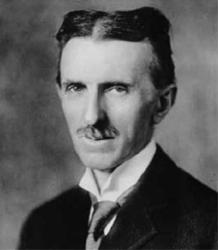
Emanuel Caner
- Early Life and Education
- Scientific Career
- Groundbreaking Research
- Family and Recognition
- Honors and Legacy
Early Life and Education
Emanuel (Monya) Aizikovich Kaner, a distinguished Soviet physicist, was born in Kharkiv, Ukraine, in a humble family. His father worked as a clerk at the railway's central post office, while his mother was an accountant. During World War II, young Kaner lived with his mother in Blagoveshchensk while his father served at the front.
In 1954, Kaner graduated with honors from the Physics and Mathematics Faculty of Kharkiv University, earning degrees in both experimental and theoretical physics. His brilliance shone through as he earned his doctorate in 1963 with a thesis on "Bose Excitations and Resonance Phenomena in Metals."
Scientific Career
Kaner's research career took off at the Institute of Radiophysics and Electronics of the Ukrainian Academy of Sciences (IRE AN USSR) in 1955. In 1965, he established and led the Department of Solid State Theory, becoming a pillar of the Institute.
Alongside his research endeavors, Kaner taught theoretical physics at Kharkiv University from 1966 and was the esteemed editor of the journal "Solid State Communications." His guidance and mentorship extended to numerous aspiring physicists, leading to over 20 doctoral dissertations.
Groundbreaking Research
Kaner's prolific research spanned physics of solids, metal electrodynamics, radiophysics, and magnetoacoustics. His early work focused on light interference in thin metal films and the anomalous skin effect.
In 1956, Kaner and M. Ya. Azbel made a pioneering discovery: cyclotron resonance in metals. This phenomenon, known as "Azbel-Kaner cyclotron resonance," earned them recognition in the State Register of Discoveries of the USSR in 1966. Kaner's subsequent contributions to the field included the development of its kinetic theory and predictions of cyclotron resonance cutoff effects.
Kaner's research on electromagnetic wave propagation in metals broke new ground. With V. G. Skobov, he predicted several types of radio waves capable of penetrating metals. They also discovered Landau magnetic damping, a novel collisionless attenuation mechanism. These advancements laid the foundation for radio spectroscopy of metals.
In collaboration with V. F. Gantmakher, Kaner unveiled the ballistic (single-particle) mechanism for radio wave penetration into metals. This mechanism led to the discovery of Gantmakher-Kaner modes, registered with the USSR State Register of Discoveries in 1970.
Kaner explored instabilities in plasma, predicting new types such as helical and cyclotron parametric instabilities. His groundbreaking work in magnetoacoustic properties of metals focused on acoustic cyclotron resonance, resonance on open orbits, and electron-phonon interactions. These seminal contributions were recognized with the USSR State Prize in 1980.
Kaner's ingenuity extended to atmospheric radio wave propagation, with practical implications. Notably, he independently proposed a method for laser isotope separation, a pioneering concept in the field.
Family and Recognition
Kaner's wife, Irina Yakovlevna Fugol, was an accomplished physicist in her own right, working at the Institute of Physics and Technology of Low Temperatures (FTINT), earning a doctorate and receiving the prestigious USSR State Prize. Their daughter, Natalia Henzel, pursued a successful career in physics as well.
Honors and Legacy
Emanuel Kaner's exceptional contributions to physics were recognized with the USSR State Prize in 1980. His groundbreaking research continues to inspire physicists worldwide, cementing his legacy as a visionary scientist.