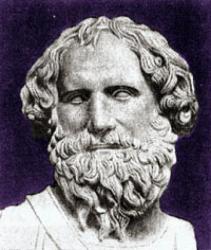
Rudolph Clausius
 Germany
- Rudolf Julius Emanuel Clausius (1822–1888)
- Academic Career
- Contributions to Thermodynamics
- Contributions to the Kinetic Theory of Gases
- Other Contributions
Rudolf Julius Emanuel Clausius (1822–1888)
Rudolf Julius Emanuel Clausius was a German physicist and one of the founders of thermodynamics and the molecular-kinetic theory of heat. Born on January 2, 1822, in Köslin (now Koszalin, Poland), Clausius came from a family of pastors. He attended a private school and then a gymnasium. He completed his studies at the University of Berlin in 1848, where he earned a PhD.

Academic Career
From 1850 to 1857, Clausius taught in Berlin and Zurich. He served as a professor at the universities of Zurich, Würzburg, and Bonn. In 1884, he became the rector of the University of Bonn. Clausius' major works focused on the foundations of thermodynamics and the kinetic theory of gases.
Contributions to Thermodynamics
Clausius was the first to give a rigorous formulation of the principle of the equivalence of heat and work. In 1850, independently of William Rankine, he derived the relationship between these quantities (the first law of thermodynamics). He also developed the ideal thermodynamic cycle for steam engines, known as the Rankine-Clausius cycle.
In the same year, Clausius, along with William Thomson, formulated the first version of the second law of thermodynamics: "Heat cannot spontaneously flow from a colder body to a hotter body."
In 1865, Clausius introduced the concept of entropy and established its important property: in a closed system, entropy either remains constant (reversible processes) or increases (irreversible processes). This showed that the change in entropy determines the direction of a given process. Clausius also proposed the idea of the "heat death" of the universe, extending the principle of increasing entropy to the entire cosmos. However, Ludwig Boltzmann later proved the fallacy of this idea.
Contributions to the Kinetic Theory of Gases
Clausius made significant contributions to the development of the molecular-kinetic theory of gases. He introduced a new approach called the "method of average values" (which is now known as statistical methods), explaining various phenomena such as internal friction, thermal conductivity, and diffusion from a unified perspective. He introduced the concept of the mean free path of molecules and calculated its value in 1860, which later allowed for the estimation of molecular sizes. Clausius also generalized the equation of state proposed by Johannes van der Waals and revealed the significance of the equation connecting the temperature of a substance's melting (or boiling) point to its pressure (the Clausius-Clapeyron equation).
Other Contributions
In addition to his work in thermodynamics and the kinetic theory of gases, Clausius developed a theory of dielectric polarization. Independently of Ottaviano Mossotti, he derived the relationship between dielectric permittivity and polarizability, known as the Clausius-Mossotti formula.
Rudolf Clausius passed away on August 24, 1888, in Bonn. His clear and concise exposition of concepts greatly influenced the early development of the mechanical theory of heat and its applications in various scientific fields. In recognition of his contributions, Clausius was elected as a corresponding member of the St. Petersburg Academy of Sciences in 1878.