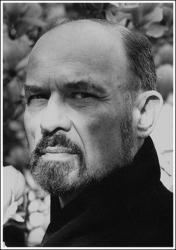
Emil Kraepelin
 Germany
Biography of Emil Kraepelin
Emil Kraepelin (1856–1926) was a German psychiatrist and one of the most influential scientists of his time. He was born on February 15, 1856 in Neustrelitz and studied medicine in Würzburg. Kraepelin worked in the clinics of Munich and Leipzig, and was the chief psychologist at the Silesian Institute in Lebus and the municipal hospital in Dresden. In 1885, he became a professor of psychiatry at the University of Dorpat (now Tartu, Estonia), and in 1891, he became a professor at the University of Heidelberg. In 1903, he moved to the University of Munich. From 1922 onwards, Kraepelin worked at the Munich Institute of Psychiatry.
Contributions to Psychiatry
For over 50 years, Kraepelin collected material that would lay the foundations for the classification of psychoses, and only towards the end of his life did he formulate his theory. He gathered hundreds of case histories from patients, documenting their experiences and sensations. Kraepelin believed that valuable information could be obtained from postmortem examinations of mentally ill individuals. His nosological views greatly influenced the development of psychiatry.
In his book "Hundert Jahre Psychiatrie" (One Hundred Years of Psychiatry, 1918), Kraepelin attempted to trace the progress in the treatment of mental illnesses and outline future research directions. He was not only an outstanding clinician and researcher but also a remarkable educator. He organized advanced courses for psychiatrists from various countries in Munich. His textbook "Psychiatrie" (1910–1915) went through numerous editions and was translated into many languages.
Legacy
Emil Kraepelin passed away on October 7, 1926 in Munich. His work and contributions continue to serve as a cornerstone in the field of psychiatry. His systematic approach to understanding mental illnesses and his emphasis on careful observation and classification laid the groundwork for the modern diagnostic system used in psychiatry today. He is remembered as a pioneer in the field and a key figure in advancing our understanding of mental health.