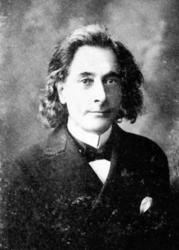
Emile Ozhie
 France
Biography of Emile Augier
Emile Augier (Guillaume-Victor-Emile Augier, 1820-1889) was a renowned French playwright. He was the grandson of Pigo-Lebrun (Antoine P. de L'Epine), and the son of a lawyer. Augier briefly studied law before dedicating himself to the world of literature.
Transition to Contemporary Life
Initially, Augier explored classical themes in his work, writing a comedy in verse called "Cigue" that was inspired by the recently released tragedy by Ponsard. However, he soon shifted his focus to contemporary life. In his numerous comedies, Augier skillfully captured vivid and realistic portrayals of French society during the July Monarchy and the Second Empire. He sympathized with the bourgeoisie and their tastes and ideals, making him a representative of the so-called "école du bon sens" or "school of common sense."
Literary Fame
Augier secured his literary reputation with plays such as "Aventurière" (1848) and "Gabrielle" (1849), which were written in beautiful and melodious verse. In "Gabrielle," which earned him the Montyon Prize for Virtue, the author rebelled against illicit love and criminal passions. In his later plays, such as "Les Effrontés," "Le Fils du Giboyer," and "La Contagion," Augier's calm critique of societal norms transformed into sharp social satire. He denounced the rise of unscrupulous individuals in various professions, particularly targeting the press and the clergy. These works sparked significant controversy in the media, with Louis Viellé responding with a pamphlet titled "Le Fond du Giboyer," and Victor Laprade publishing the satire "Chasse aux Vaincus," leading to further debates and objections from Augier.
With "Maître Guérin," Augier returned to the genre of moral comedy. He also wrote plays such as "Lions et Renards," "Jean Pommeray," "Madame Caverlet" (which delves into the issue of divorce), and "Les Fourchambault." Among his other notable works is "Gendre de Mr. Poirier" (written in collaboration with Sando in 1854). Augier also authored the vaudeville play "L'habit vert" (1849) in collaboration with Alfred de Musset, and the five-act drama "Diana" (1852), inspired by Victor Hugo's tragedy "Marion de Lorme."
In 1876, Augier began publishing a complete edition of his plays, including the prefaces where he presented himself as a moral teacher who had the right to expose hidden social flaws due to his didactic purpose. He was elected as a member of the French Academy in 1857. Augier held a prominent position in 19th-century French theater alongside Alexandre Dumas the Younger, with whom he shared similarities in play themes and social tendencies. However, Dumas demonstrated a deeper understanding of contemporary psychology, while Augier focused more on depicting typical life conditions rather than the impact of these conditions on individual characters. Augier's success can be attributed to his ability to express the bourgeois ideals of the mid-19th century in France and his skill in presenting simple morals in traditional verse. While his dialogue may not be as brilliant and witty as Dumas's, Augier's plays are still captivating, displaying a strict adherence to form. His verse occasionally lacks eloquence and adheres to established patterns. One of Augier's main literary achievements was the creation of several vivid character types, including Giboyer, Maître Guérin, and Mr. Poirier.
A collection of Augier's works, "Théâtre complet," was published in Paris between 1876 and 1878.