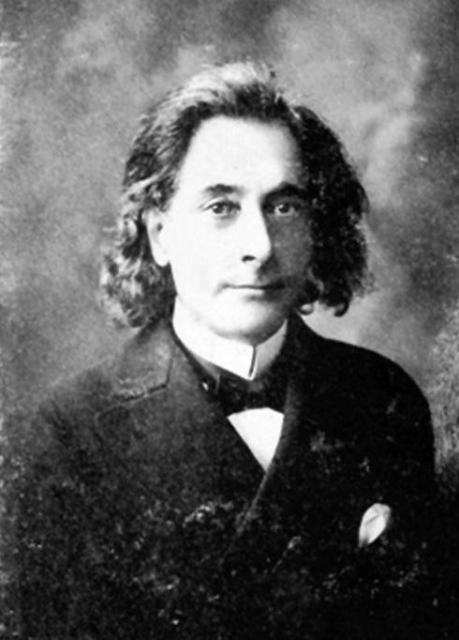
Naftaly Hertzs-Imber
 USA
USABiography of Naftali Herz Imber
Naftali Herz Imber, the Jewish poet who wrote the words to the Israeli national anthem, was born in 1856 in Eastern Galicia, which is now known as Lviv, Ukraine. Living in a time when Jews faced discrimination and lived in isolated communities, Imber began writing poetry at a young age. His first poem was dedicated to the centennial anniversary of the annexation of Bukovina to Austria, and it caught the attention of Emperor Franz Joseph, who awarded Imber with a prize.
Imber was known for his bohemian lifestyle and his wanderlust. He traveled extensively throughout Hungary, Serbia, and Romania, writing poetry about his experiences and advocating for the return of the Jewish people to their ancient homeland, Palestine.
In 1882, Imber met Sir Laurence Oliphant, an Englishman who convinced him to accompany him to Palestine to establish a Jewish state. Although Imber was officially appointed as the secretary for Jewish affairs, his lack of discipline and aversion to regular work led him to be more of a figurehead rather than an actual secretary. However, he did receive a regular salary.
During his time in Palestine, Imber was inspired by the holy land and wrote some of his most famous poems there. His collection of poems, titled "Morning Star," was published in Jerusalem and included his earlier work, including the poem "Tikvateinu" ("Our Hope"), which would later become the lyrics to the Israeli national anthem.
The melody for the anthem was attributed to an amateur musician named Samuel Cohen, who came across Imber's poem and composed the music for it. The song, originally titled "Hatikvah" ("The Hope"), gained popularity among Jewish settlers in Palestine and spread throughout the Jewish communities in Europe.
After six years in Palestine, Imber continued his wanderings, traveling to Europe and eventually settling in the United States. He struggled to find steady work and supported himself by writing articles on Kabbalah and Talmud, as well as translating texts into Hebrew.
Imber remained passionate about the Zionist movement and closely followed events in Europe, including the Jewish pogroms. He took pride in the fact that Jews were beginning to fight back against their oppressors and saw it as a sign of a normal and proud people.
Sadly, Imber's life was plagued by alcoholism and illness. He passed away in New York City in 1909 at the age of 53. In 1953, his remains were brought to Israel and laid to rest in Jerusalem.
Although Imber's life was marked by hardships, his legacy lives on through his poetry and the enduring words of the Israeli national anthem. His song, "Hatikvah," continues to be sung and serves as a symbol of hope and the Jewish people's connection to their ancestral homeland.


