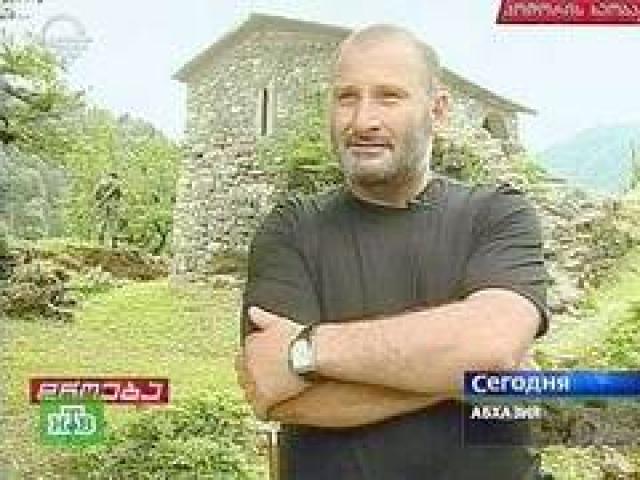
Emzar Kviciani
 Georgia
- Early Life and Education
- Criminal Background
- Georgian-Abkhaz War
- Post-War Period
- Suspected Criminal Activity
- Political Crisis and Revolt
- Conflict and Aftermath
Early Life and Education
Emzar Bekmuzarovich Kvitsiani was born on April 25, 1961, in the village of Chkhalta in the Kodori Gorge of the Georgian SSR. His parents were Bekmurza Kvitsiani and Mariam Gurchiani. He has one sister named Nora.
In 1988, Kvitsiani graduated from the Economics Department of the Novosibirsk Agricultural Institute. According to other sources, he received his higher agricultural education in Volgograd.
Criminal Background
During the Soviet era, Kvitsiani reportedly faced criminal charges three times: for hooliganism, theft, and suspected murder. The investigation into the murder case was never completed due to political turmoil associated with the dissolution of the USSR.
Georgian-Abkhaz War
During the Georgian-Abkhaz War of 1992-93, Kvitsiani formed and led the "Monadire" ("Hunter") detachment, which fought on the Georgian side against Abkhaz separatists. Military experts believe that Kvitsiani played a significant role in preventing the Kodori Gorge, geographically part of Abkhazia, from falling under Abkhaz control.
Post-War Period
After 1993, the Kodori Gorge became a largely lawless territory dominated by warlords, with Kvitsiani emerging as the most influential figure. From 1997 to 2000, he served as Deputy State Commissioner for the Kadori Gorge before assuming the position himself in 2000.
Kvitsiani's influence in the Gorge extended to the point where high-ranking Georgian officials reportedly consulted him before making decisions about the region. In 1998, his "Monadire" detachment officially became a separate battalion within the Georgian Armed Forces, but in reality, it remained under Kvitsiani's personal command.
Suspected Criminal Activity
Some reports suggest that Kvitsiani had ties to Tariel Oniani, a Georgian "thief in law." This led to speculation that he represented Oniani's interests in the Kodori Gorge rather than the Georgian government. However, Kvitsiani vehemently denied any such connection.
Kvitsiani's name was linked to kidnappings in the Kodori Gorge in the late 1990s, including that of UN peacekeepers and high-ranking Georgian officials. While all hostages were eventually released following Kvitsiani's intervention, some media outlets alleged his involvement in their abduction.
Political Crisis and Revolt
In 2003, Kvitsiani supported Eduard Shevardnadze in the "Rose Revolution," opposing Mikhail Saakashvili and other opposition leaders. However, in December 2004, he was dismissed from his post as State Commissioner by Saakashvili.
In April 2005, Georgian Defense Minister Irakli Okruashvili announced plans to disband the "Monadire" detachment, citing budgetary concerns. Kvitsiani's fighters refused to surrender their weapons, setting the stage for a confrontation.
On July 23, 2006, Kvitsiani declared that he no longer recognized the authority of the Georgian government. Tbilisi viewed this as an act of rebellion and deployed troops to the Kodori Gorge.
Conflict and Aftermath
The Georgian government stated that the military operation aimed to restore law and order in the region. However, some analysts suggested that it was a prelude to military action against Abkhazia.
On July 29, Georgian Interior Minister Vano Merabishvili announced that Kvitsiani had fled the Kodori Gorge and was hiding in Russia. The Russian embassy in Georgia denied having any information about Kvitsiani's whereabouts.
Kvitsiani's sister, Nora, was arrested and charged with forming an illegal armed group and illegally acquiring firearms. She denied the allegations.
Kvitsiani is married to Tetnuld Ansiani and has two sons, Giorgi and Iso.